The surprising key to magpie intelligence: it’s not genetic
- Written by: Lizzie Speechley, Behavioural Ecologist, The University of Western Australia
If you’ve ever had the pleasure of encountering Australia’s iconic magpies, you know these birds are intelligent creatures. With their striking black and white plumage, loud warbling voices and complex social behaviours, magpies possess a level of avian brilliance that fascinates birders and scientists alike.
But what enables these clever birds to thrive? Are their sharp cognitive abilities innate – something coded into their genetic makeup? Or are magpie smarts more a product of their environment and social experiences?
In a new study[1], we shed light on the “nature versus nurture” debate – at least when it comes to avian intelligence.
Bigger social groups, smarter birds
Our study focused on Western Australian magpies, which unlike their eastern counterparts live in large, cooperative social groups all year round. We put young fledglings – and their mothers – through a test of their learning abilities.
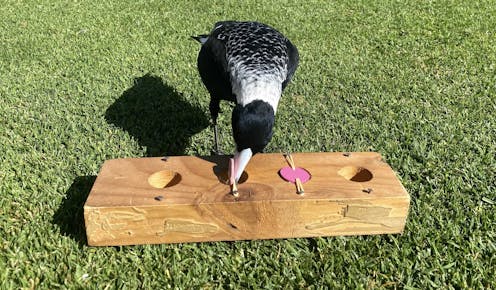
We made wooden “puzzle boards” with holes covered by different-coloured lids. For each bird, we hid a tasty food reward under the lid of one particular colour. We also tested each bird alone, so it couldn’t copy the answer from its friends.
Through trial and error, the magpies had to figure out which colour was associated with the food prize. We knew the birds had mastered the puzzle when they picked the rewarded colour in 10 out of 12 consecutive attempts.
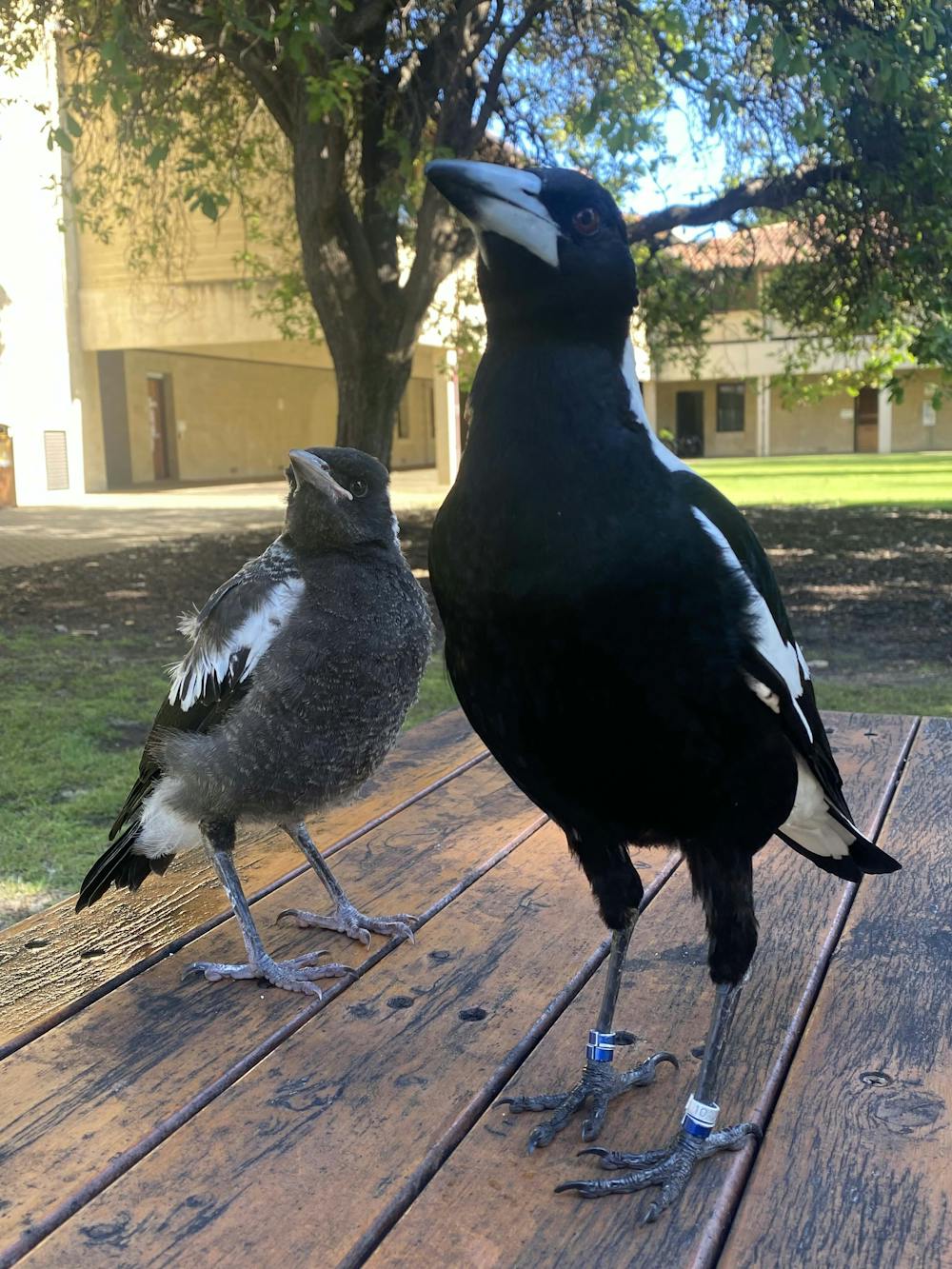
We tested fledglings at 100, 200 and 300 days after leaving the nest. While they improved at solving the puzzle as they developed, the cognitive performance of the young magpies showed little connection to the problem-solving prowess of their mothers.
Instead, the key factor influencing how quickly the fledglings learned to pick the correct colour was the size of their social group. Birds raised in larger groups solved the test significantly faster than those growing up in smaller social groups.
Fledglings living in groups of ten or more birds needed only about a dozen tries to consistently pick the rewarded colour. But a youngster growing up in a group of three took more than 30 attempts to learn the link between colour and food.
How the social environment shapes cognition
Why would living in a larger social group boost cognitive abilities? We think it probably comes down to the mental demands that social animals face on a daily basis, such as recognising and remembering group members, and keeping track of different relationships within a complex group.
Magpies can learn to recognise and remember humans, too. The bird populations we work with live in the wild, but they recognise us by our appearance and a specific whistle we make.
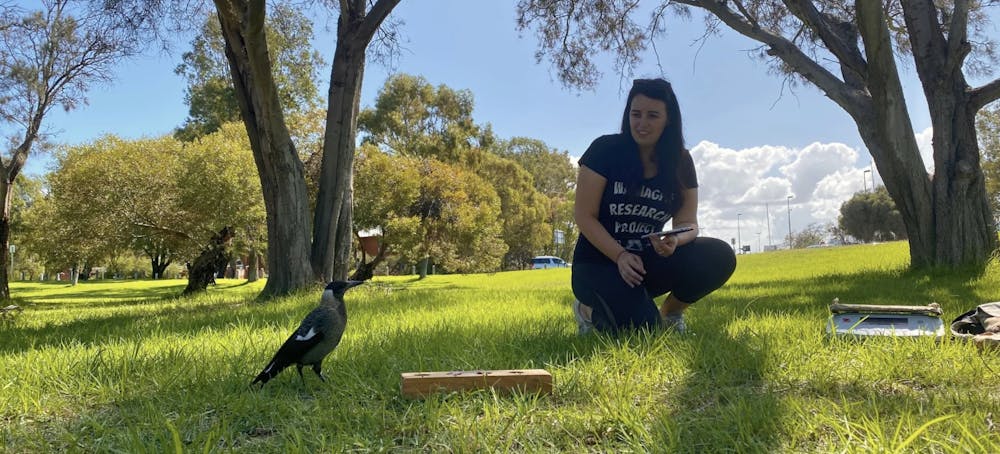 Magpies recognise researchers and come looking for food.
Sarah Woodiss-Field
Magpies recognise researchers and come looking for food.
Sarah Woodiss-Field
A young magpie living in a group gets plenty of mental exercise recognising and remembering numerous individuals and relationships. Working to make sense of this stream of social information may boost their ability to learn and solve problems.
Our findings go against the idea that intelligence is something innately “set” within an animal at birth, based solely on genetic inheritance. Instead, we show how cognition can be shaped by the environment, especially in the first year after leaving the nest when young magpies’ minds are still developing.
While we focused specifically on Australian magpies, the implications of our research could extend to other highly social and intelligent species.
Read more https://theconversation.com/the-surprising-key-to-magpie-intelligence-its-not-genetic-225654