Is your child ‘overscheduled?’ How to get the balance right on extracurricular activities
- Written by: Elise Waghorn, Lecturer, School of Education, RMIT University
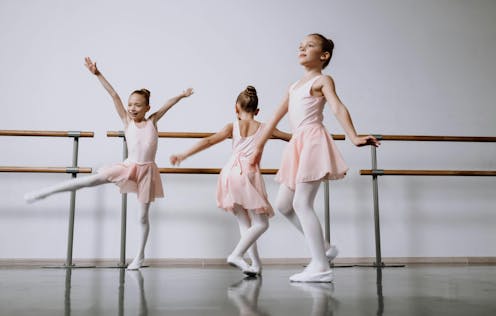
It’s a weeknight, parents rush through the door from work, grab a snack, and then speed off in various directions to children’s extracurricular activities. As they do, they are managing tired and hungry kids as they all move from one thing to the next. Sound familiar?
As of 2022–23, almost 50% of Australian children[1] under 14 participated in extracurricular sport. According to the Australian Bureau of Statistics[2], 19% of Australian children aged five to 14 did music out of school hours in 2021–22, while 13% did dance and 5% did drama.
There can be a lot of pressure[3] to have your child in extracurricular activities, as this is seen as a way of giving them a rounded education and upbringing. And it can get expensive.
Pre-pandemic, Australian families spent an average of A$1,859 per child[4] per year on extracurricular activities.
How do you get the balance right?
What are the benefits?
Extracurricular activities can provide a range of benefits.
Studies have shown extracurricular activities can help students academically. For example, a 2011 study[5] of US high school students showed participation in extracurricular activities was linked with better results in maths. Other US studies[6] have shown students who participate in extracurricular activities are more likely to complete a college (university) degree.
Research has shown[7] extracurricular activities can help young people develop self belief, goal-setting, confidence and the ability to adapt to unfamiliar situations.
In turn, it can also help with mental health and emotional regulation. Team activities have especially been shown to reduce anxiety in already anxious kids, increase a sense of belonging and boost social awareness.
Read more: The kids who'd get the most out of extracurricular activities are missing out – here's how to improve access[10]
What are the drawbacks?
You may have heard media reporting about “oversheduling[11]”. Too many activities[12] can see children neglect their schoolwork and limit family time, which are also important parts of growing up. It can also have an impact on children’s sleep.
High levels of sport in particular can lead to injuries and burnout.
It can also lead to “overtraining syndrome[13]” where children don’t recover adequately from previous training or competitions.
Not only does a child lose interest in the activity but their mood is linked to how well they perform. The activity can also come to dominate the family’s life.
How do you get the balance right?
Start by working out as a family what is financially reasonable and how much time you can commit. Think about not just the game or lesson itself but any other regular training or practice that may be involved.
Look at what your child is genuinely interested in, rather than what you feel they should do (as this just adds unnecessary pressure).
You could consider limiting children to one or two activities per week. This allows the child to focus on that activity and any training or practice that goes with it.
But there is no magic number of activities experts consider to be the “perfect” amount – each child is different. Some other factors[14] you can consider are:
is the child still getting adequate sleep?
can they still spend time with the rest of the family?
are they able to have some down time?
do they enjoy their activities?
Read more: Grit or quit? How to help your child develop resilience[17]
What age can you start?
Children as young as two or three can benefit from extracurricular activities. As they start to assert their independence, programs in dance, sport or music can boost their ability to socialise with others, listen and get ready for school.
There are also benefits in starting extracurricular activities before the age of ten. Research shows[18] if you start before ten, children are more likely to stick with the activity for longer because it will become part of their identity.
Having said that, there is of course no issue with starting new activities after this age as children grow and develop new interests.
References
- ^ almost 50% of Australian children (www.clearinghouseforsport.gov.au)
- ^ Australian Bureau of Statistics (www.abs.gov.au)
- ^ lot of pressure (www.parents.com)
- ^ average of A$1,859 per child (mozo.com.au)
- ^ 2011 study (pubmed.ncbi.nlm.nih.gov)
- ^ US studies (www.sciencedirect.com)
- ^ shown (files.eric.ed.gov)
- ^ Brian Matangelo/Unsplash (unsplash.com)
- ^ CC BY (creativecommons.org)
- ^ The kids who'd get the most out of extracurricular activities are missing out – here's how to improve access (theconversation.com)
- ^ oversheduling (www.smh.com.au)
- ^ many activities (5210.psu.edu)
- ^ overtraining syndrome (www.rchsd.org)
- ^ other factors (childmind.org)
- ^ Katya Wolf/Pexels (www.pexels.com)
- ^ CC BY (creativecommons.org)
- ^ Grit or quit? How to help your child develop resilience (theconversation.com)
- ^ shows (link.springer.com)