A philosopher makes the case for a thoughtful life – but life is more than a thought experiment
- Written by: Oscar Davis, Assistant Professor in Philosophy and History, Bond University
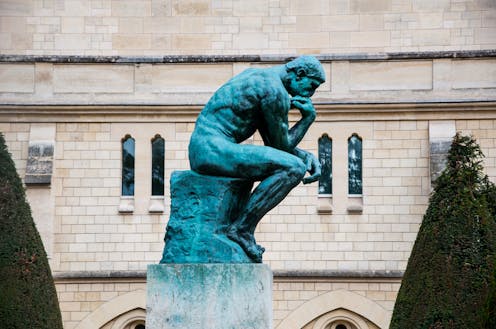
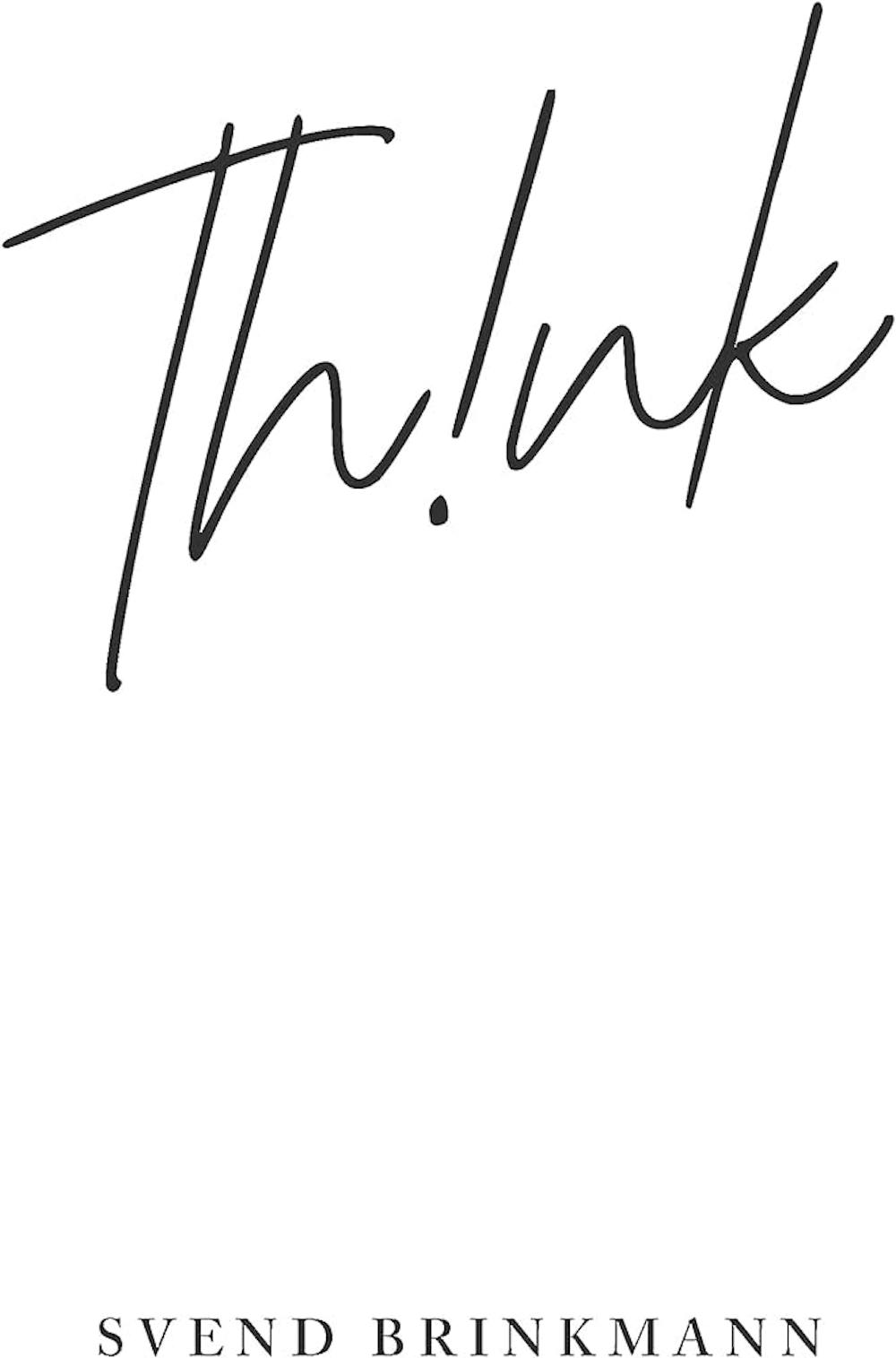
Svend Brinkmann’s Think[1] is a book in praise of the thoughtful life and an easygoing exploration of the role of thinking in our lives today.
The book is essentially in two parts. The first is descriptive. It explores questions like “what do we mean by thinking?”, “why has it become difficult to think in today’s world?” and “where does thinking come from?”
The second part is prescriptive. Brinkmann provides some quick and relatively simple strategies for bringing more thoughtfulness into our everyday lives.
Think: In Defence of a Thoughtful Life – Svend Brinkmann (Polity)
The reader is introduced to a variety of important and complicated philosophical questions. Brinkmann introduces, for example, the Ancient Greek philosopher Socrates and refers to a challenge that Plato’s brother, Glaucon, raises in The Republic[2].
Glaucon asks Socrates to imagine that the existence of a ring capable of making one invisible whenever the wearer desired. Anyone with such a power, Glaucon argues, would steal and murder and “in all respects be like a god among men”.
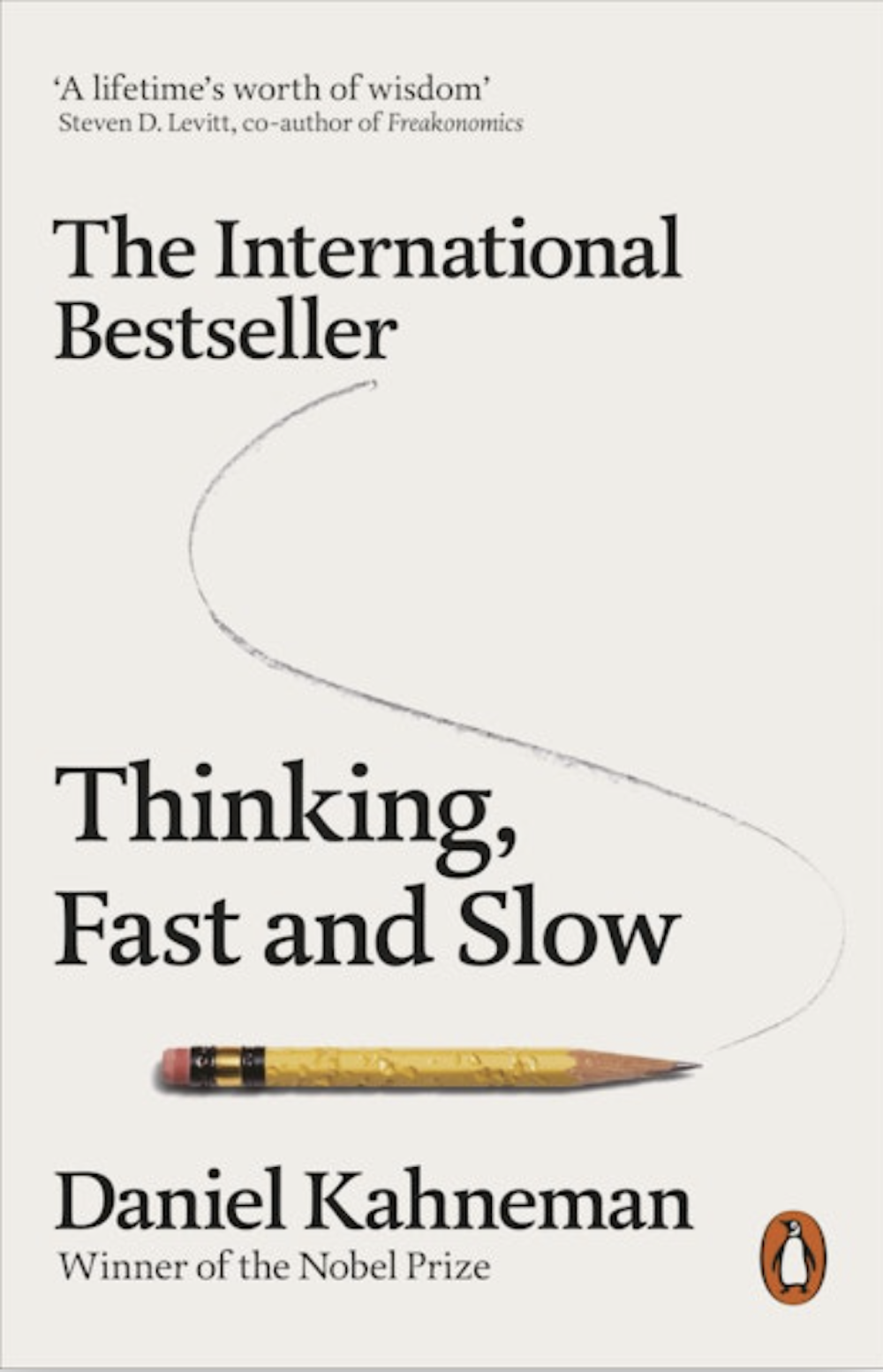 Consider the famous Wason selection task[5]. Imagine you are presented with four cards, each with a number on one side and a colour on the other. You are dealt the cards in the following order: 3, 8, Blue, Red.
You are then asked which card or cards you must turn over in order to prove the rule that a card showing an even number is blue on its opposite face. Which card or cards do you turn over?
The test seems simple, but the original experiment found that about one in ten of us answer it correctly.
The Wason test probes our ability to apply rules of classical logic surrounding hypothetical syllogisms, or conditional reasoning. Intuitive answers to the test which utilise only System 1 modes of thought won’t cut it here. It takes slow and careful deliberation, the kind of rational thinking Kahneman attributes to System 2, to deduce that we should turn over the 8 card and the red card to prove the rule.
Brinkmann’s idea of thoughtfulness, however, is not just about exercising our rational powers to solve puzzles like this one. He calls for a greater emphasis on what he calls “the existential dimensions of thinking”.
Just as the mindfulness movement seeks to bring our attention to our being in time and space, Brinkmann’s thoughtfulness is about exercising our capacity to contemplate ourselves and the world around us.
Read more:
Finding your essential self: the ancient philosophy of Zhuangzi explained[6]
Thought experiments
The breadth of Brinkmann’s exploration of thought-provoking ideas is likely to please the curious reader. In just the first two chapters, he briefly introduces the ideas of Aristotle[7], Martin Heidegger[8], Hannah Arendt[9], John Dewey[10], Judith Jarvis Thomson[11] and John Rawls[12].
Each of these philosophers, either in the study of their work or in the exercise of their thought experiments, offers important lessons in the significance of the thoughtful life.
Each chapter ends with an exercise – mostly famous thought-experiments from various fields of philosophy – which Brinkmann offers as a practical applications of the kind of thoughtfulness he explores.
Consider the famous Wason selection task[5]. Imagine you are presented with four cards, each with a number on one side and a colour on the other. You are dealt the cards in the following order: 3, 8, Blue, Red.
You are then asked which card or cards you must turn over in order to prove the rule that a card showing an even number is blue on its opposite face. Which card or cards do you turn over?
The test seems simple, but the original experiment found that about one in ten of us answer it correctly.
The Wason test probes our ability to apply rules of classical logic surrounding hypothetical syllogisms, or conditional reasoning. Intuitive answers to the test which utilise only System 1 modes of thought won’t cut it here. It takes slow and careful deliberation, the kind of rational thinking Kahneman attributes to System 2, to deduce that we should turn over the 8 card and the red card to prove the rule.
Brinkmann’s idea of thoughtfulness, however, is not just about exercising our rational powers to solve puzzles like this one. He calls for a greater emphasis on what he calls “the existential dimensions of thinking”.
Just as the mindfulness movement seeks to bring our attention to our being in time and space, Brinkmann’s thoughtfulness is about exercising our capacity to contemplate ourselves and the world around us.
Read more:
Finding your essential self: the ancient philosophy of Zhuangzi explained[6]
Thought experiments
The breadth of Brinkmann’s exploration of thought-provoking ideas is likely to please the curious reader. In just the first two chapters, he briefly introduces the ideas of Aristotle[7], Martin Heidegger[8], Hannah Arendt[9], John Dewey[10], Judith Jarvis Thomson[11] and John Rawls[12].
Each of these philosophers, either in the study of their work or in the exercise of their thought experiments, offers important lessons in the significance of the thoughtful life.
Each chapter ends with an exercise – mostly famous thought-experiments from various fields of philosophy – which Brinkmann offers as a practical applications of the kind of thoughtfulness he explores.
 Svend Brinkmann pictured in November 2017.
Mogens Engelund, via Wikimedia Commons, CC BY-SA[13][14]
The second part of his book, the prescriptive part, is unfortunately the shortest part. But Brinkmann offers seven different ways we can all better incorporate thoughtfulness into our lives.
We can think with the world, by which he means we can curate our environments in such a way that is conducive to living a thoughtful life. This might involve learning how best to externalise certain cognitive exercises (for example, by keeping a journal) and creating an “ecology of attention” for ourselves.
Svend Brinkmann pictured in November 2017.
Mogens Engelund, via Wikimedia Commons, CC BY-SA[13][14]
The second part of his book, the prescriptive part, is unfortunately the shortest part. But Brinkmann offers seven different ways we can all better incorporate thoughtfulness into our lives.
We can think with the world, by which he means we can curate our environments in such a way that is conducive to living a thoughtful life. This might involve learning how best to externalise certain cognitive exercises (for example, by keeping a journal) and creating an “ecology of attention” for ourselves.
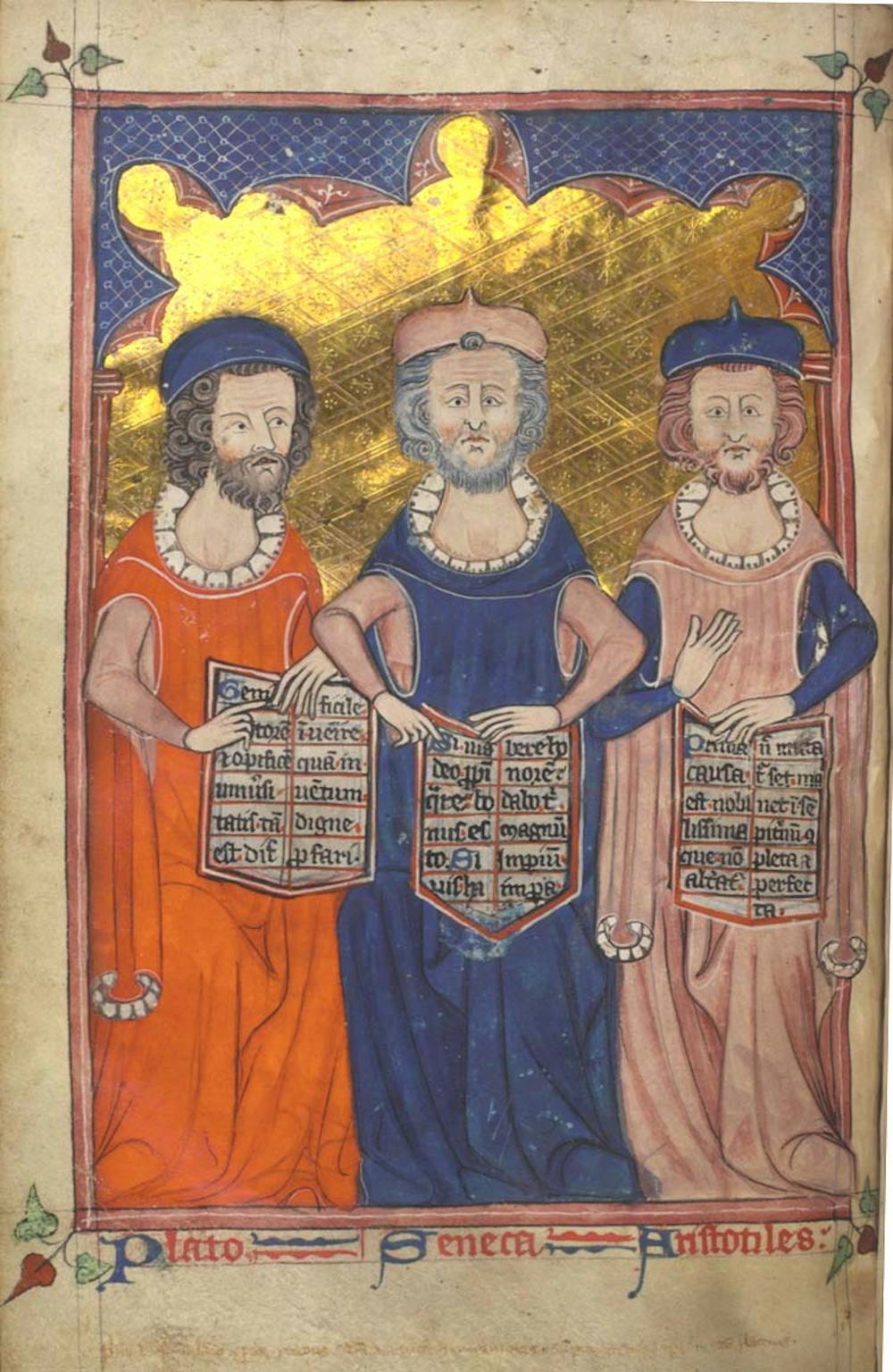 Plato, Seneca and Aristotle – artist unknown (c.1330).
Public domain, via Wikimedia Commons[15]
We can think with our bodies and think while moving. There is a long tradition of walking and thinking. Socrates famously walked with the citizens of Athens as he practised his distinct line of philosophical questioning. Aristotle’s school in Athens also became known as the peripatetic school, after his habit of walking while lecturing.
We can think with books, so long as we take the time to read slowly, carefully and thoughtfully. We can think with children, who constantly inspire us to imagine, question everything, and think creatively. And we can think in conversation because, Brinkmann argues, “all thinking is dialogical”. Thinking with others and thinking with ourselves requires the time and patience of inquiry in the form of dialogue.
Finally, we can think with history. We ought to direct a thoughtful attention to the past, according to Brinkmann, because the better you understand “the historical forces that shape you, the better you can think”.
Instructing and teaching
The final experiment that Brinkmann leaves us with is thought-provoking. “Leave behind philosophical reflections on ethics, politics, and personal identity,” he says, and instead “undertake a more personal and existential thought experiment”.
Imagine that our lives are to be turned into books. What would the chapters be named? How would the book begin? How would the book end?
Brinkmann here envisions a personal framing of the thoughtful life. Our reflexivity and contemplative abilities are supposedly what distinguish us, homo sapiens (literally “wise human”), from non-human animals. So if we are to lead more meaningful and fulfilling lives, then:
we need to practise thoughtfulness and create better conditions for thinking, particularly in a society that has focused for so long on efficiency over immersion, and utility over meaning.
Despite its merits, this is a book in praise of thoughtfulness which may ultimately fail to prompt the meaningful contemplation it espouses. Its pace and brevity are likely to make the book more accessible and appealing to the modern reader, but Brinkmann risks falling prey to the very “efficiency” and “utility” he criticises.
The philosopher is a lover of wisdom. Inspiring thoughtfulness, and so inspiring the process of being and becoming a philosopher, must involve loving attention, wonder and awe towards the world, and towards our existence as members of a global community.
Reminding us that thinking is what makes us human, Immanuel Kant[16] wrote:
Two things fill the mind with ever new and increasing admiration and awe, the more often and steadily we reflect upon them: the starry heavens above me and the moral law within me. I do not merely conjecture them and seek them as though obscured in darkness or in the transcendent region beyond my horizon: I see them before me, and I associate them directly with the consciousness of my own existence.
Plato, Seneca and Aristotle – artist unknown (c.1330).
Public domain, via Wikimedia Commons[15]
We can think with our bodies and think while moving. There is a long tradition of walking and thinking. Socrates famously walked with the citizens of Athens as he practised his distinct line of philosophical questioning. Aristotle’s school in Athens also became known as the peripatetic school, after his habit of walking while lecturing.
We can think with books, so long as we take the time to read slowly, carefully and thoughtfully. We can think with children, who constantly inspire us to imagine, question everything, and think creatively. And we can think in conversation because, Brinkmann argues, “all thinking is dialogical”. Thinking with others and thinking with ourselves requires the time and patience of inquiry in the form of dialogue.
Finally, we can think with history. We ought to direct a thoughtful attention to the past, according to Brinkmann, because the better you understand “the historical forces that shape you, the better you can think”.
Instructing and teaching
The final experiment that Brinkmann leaves us with is thought-provoking. “Leave behind philosophical reflections on ethics, politics, and personal identity,” he says, and instead “undertake a more personal and existential thought experiment”.
Imagine that our lives are to be turned into books. What would the chapters be named? How would the book begin? How would the book end?
Brinkmann here envisions a personal framing of the thoughtful life. Our reflexivity and contemplative abilities are supposedly what distinguish us, homo sapiens (literally “wise human”), from non-human animals. So if we are to lead more meaningful and fulfilling lives, then:
we need to practise thoughtfulness and create better conditions for thinking, particularly in a society that has focused for so long on efficiency over immersion, and utility over meaning.
Despite its merits, this is a book in praise of thoughtfulness which may ultimately fail to prompt the meaningful contemplation it espouses. Its pace and brevity are likely to make the book more accessible and appealing to the modern reader, but Brinkmann risks falling prey to the very “efficiency” and “utility” he criticises.
The philosopher is a lover of wisdom. Inspiring thoughtfulness, and so inspiring the process of being and becoming a philosopher, must involve loving attention, wonder and awe towards the world, and towards our existence as members of a global community.
Reminding us that thinking is what makes us human, Immanuel Kant[16] wrote:
Two things fill the mind with ever new and increasing admiration and awe, the more often and steadily we reflect upon them: the starry heavens above me and the moral law within me. I do not merely conjecture them and seek them as though obscured in darkness or in the transcendent region beyond my horizon: I see them before me, and I associate them directly with the consciousness of my own existence.
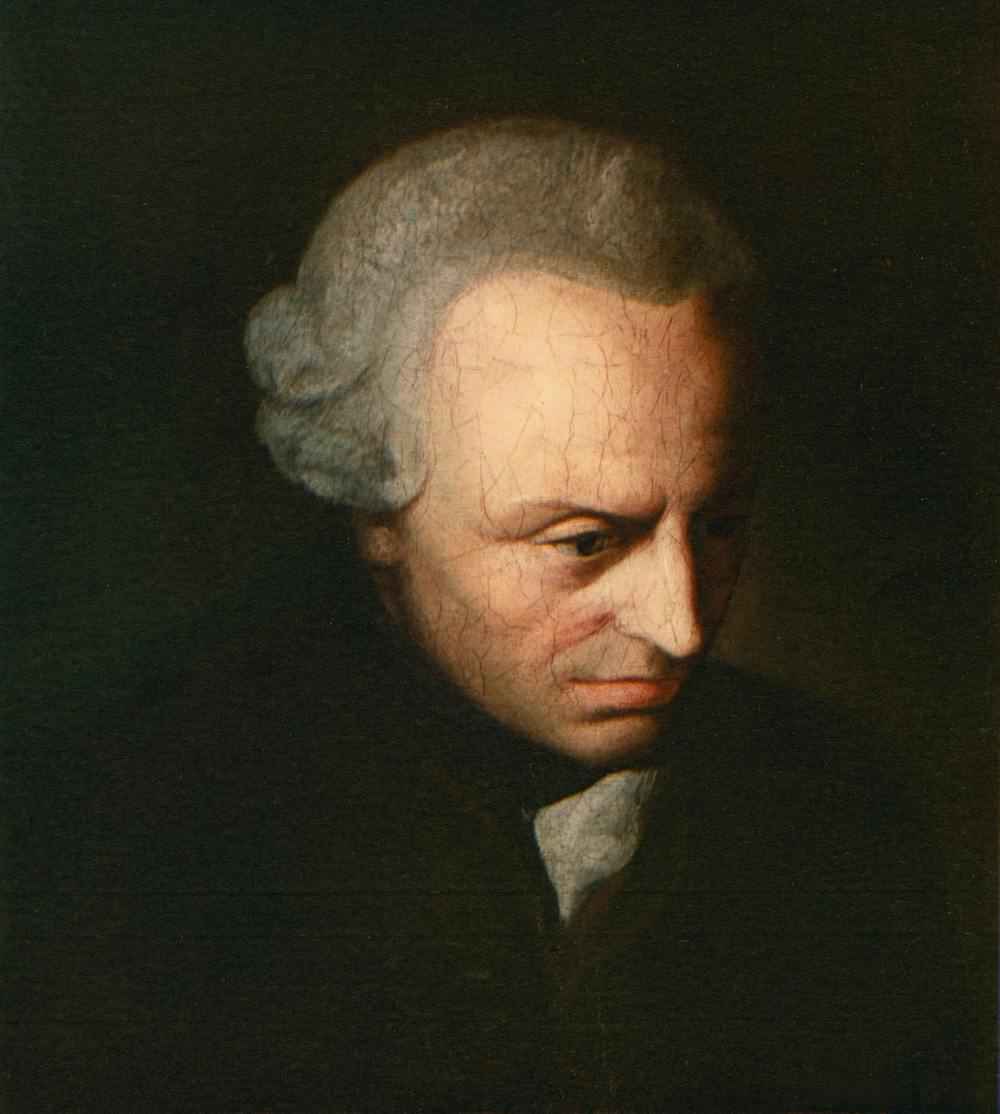 Immanuel Kant (c.1790).
Public domain, via Wikimedia Commons[17]
Perhaps the flaw of Brinkmann’s book can be best summarised in an analogy. A great science teacher does not just lay out the laws that govern the natural world and list the many achievements and discoveries that have resulted from humanity’s collective efforts over millennia. This is merely instruction.
A great science teacher, with the aim of inspiring his students to truly become scientists, fosters the curiosity within them. This is teaching.
The many thought experiments that Brinkmann offers are removed from the context of their debates. They are used as trials of thoughtfulness. But it is not clear how Trolley Problems[18] (to take one example from the book) inspire meaningful thinking about the particularities of our complex and dynamic moral lives.
Instead of being asked yet again if we would pull the lever, Brinkmann should perhaps spend more time challenging us to rethink what thinking really involves. Living more thoughtful lives is hard and not always convenient. Meaningful thought must be done slowly and carefully. It is also easy to forget that it requires practice, patience and guidance from good teachers.
The project of creating a short and accessible book in praise of thoughtfulness and its significance to the modern world is timely and important. Brinkmann is right to remind us of this.
But he also takes on the more challenging task of guiding his readers’ thinking, in an attempt to model what thoughtfulness involves, and this is where he may be underestimating them – where he does more instructing than teaching.
References^ Think (www.wiley.com)^ The Republic (iep.utm.edu)^ Guide to the classics: Plato’s Republic (theconversation.com)^ Thinking, Fast and Slow (www.penguin.com.au)^ Wason selection task (en.wikipedia.org)^ Finding your essential self: the ancient philosophy of Zhuangzi explained (theconversation.com)^ Aristotle (plato.stanford.edu)^ Martin Heidegger (plato.stanford.edu)^ Hannah Arendt (hac.bard.edu)^ John Dewey (plato.stanford.edu)^ Judith Jarvis Thomson (jwa.org)^ John Rawls (plato.stanford.edu)^ Mogens Engelund, via Wikimedia Commons (commons.wikimedia.org)^ CC BY-SA (creativecommons.org)^ Public domain, via Wikimedia Commons (commons.wikimedia.org)^ Immanuel Kant (plato.stanford.edu)^ Public domain, via Wikimedia Commons (commons.wikimedia.org)^ Trolley Problems (theconversation.com)
Immanuel Kant (c.1790).
Public domain, via Wikimedia Commons[17]
Perhaps the flaw of Brinkmann’s book can be best summarised in an analogy. A great science teacher does not just lay out the laws that govern the natural world and list the many achievements and discoveries that have resulted from humanity’s collective efforts over millennia. This is merely instruction.
A great science teacher, with the aim of inspiring his students to truly become scientists, fosters the curiosity within them. This is teaching.
The many thought experiments that Brinkmann offers are removed from the context of their debates. They are used as trials of thoughtfulness. But it is not clear how Trolley Problems[18] (to take one example from the book) inspire meaningful thinking about the particularities of our complex and dynamic moral lives.
Instead of being asked yet again if we would pull the lever, Brinkmann should perhaps spend more time challenging us to rethink what thinking really involves. Living more thoughtful lives is hard and not always convenient. Meaningful thought must be done slowly and carefully. It is also easy to forget that it requires practice, patience and guidance from good teachers.
The project of creating a short and accessible book in praise of thoughtfulness and its significance to the modern world is timely and important. Brinkmann is right to remind us of this.
But he also takes on the more challenging task of guiding his readers’ thinking, in an attempt to model what thoughtfulness involves, and this is where he may be underestimating them – where he does more instructing than teaching.
References^ Think (www.wiley.com)^ The Republic (iep.utm.edu)^ Guide to the classics: Plato’s Republic (theconversation.com)^ Thinking, Fast and Slow (www.penguin.com.au)^ Wason selection task (en.wikipedia.org)^ Finding your essential self: the ancient philosophy of Zhuangzi explained (theconversation.com)^ Aristotle (plato.stanford.edu)^ Martin Heidegger (plato.stanford.edu)^ Hannah Arendt (hac.bard.edu)^ John Dewey (plato.stanford.edu)^ Judith Jarvis Thomson (jwa.org)^ John Rawls (plato.stanford.edu)^ Mogens Engelund, via Wikimedia Commons (commons.wikimedia.org)^ CC BY-SA (creativecommons.org)^ Public domain, via Wikimedia Commons (commons.wikimedia.org)^ Immanuel Kant (plato.stanford.edu)^ Public domain, via Wikimedia Commons (commons.wikimedia.org)^ Trolley Problems (theconversation.com)