how do you fix a problem like PFAS?
- Written by: Sarah Wilson, PhD Candidate in Quantum Technology & Innovation Governance, Institue for Sustainable Futures, University of Technology Sydney
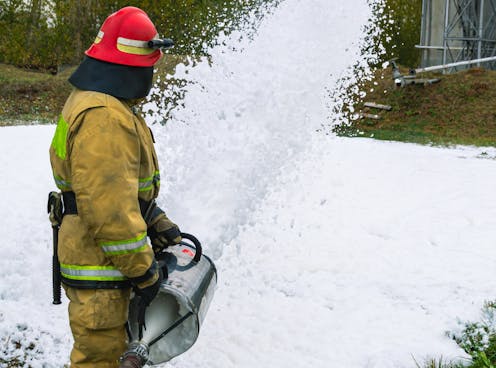
A landmark legal settlement has once again focused our attention[1] on the dangers of “forever chemicals”.
This class of chemicals, technically known as per-and polyfluoroalkyl substances, or PFAS, are widely used to make nonstick or waterproof products. The problem is, the chemicals move easily around the environment, pollute groundwater and rivers, are often carcinogenic[2] – and they don’t degrade.
This month, one of the largest makers of these chemicals, 3M, had its offer of A$16 billion to clean up PFAS-contaminated waterways approved by a US court[3]. It’s just the latest in a series of PFAS lawsuits across the United States.
While increased attention is welcome, there’s no guarantee of success. Removing and destroying PFAS from wastewater streams across a single US state, Minnesota, would cost[4] a minimum of $21 billion over 20 years. Globally, a recent report[5] by the chemical safety nonprofit ChemSec found the costs of PFAS remediation alone amount to around $26 trillion per year – not including rising healthcare costs[6] from exposure to PFAS, or damage to the environment. The 3M settlement is just the tip of the iceberg[7].
The problem now is how to actually clean up these chemicals – and prevent further pollution.

Remediation is expensive – and uncertain
In Australia, contamination is worst in firefighter training grounds and on defence force bases, due to the long-term use of firefighting foams full of PFAS. The discovery of this contamination triggered a wave of lawsuits[9]. The Department of Defence has since paid out more than $366 million in class action lawsuits.
Defence has also assumed responsibility for managing, remediating and monitoring PFAS contamination on and around[10] its bases. In 2021, the department began to actively set about remediation[11].
Read more: Removing PFAS from public water systems will cost billions and take time – here are ways you can filter out harmful 'forever chemicals' at home[12]
That sounds promising – find the pollution and fix the problem. But the reality is much more complicated.
A 2022 parliamentary inquiry described[13] PFAS remediation as an emerging and experimental industry.
This is correct. There’s a great deal of basic scientific research we have to do. This is not a simple problem. These chemicals seep into the soil and groundwater – and stay there. It’s hard to get them out.
As a result, most remediation work at defence bases to date has been part of research and development, rather than a wide-scale permanent cleanup.
To help, the defence department has brought in three major industry partners, including Emerging Compounds Treatment Technologies[14]. We don’t know how they are doing the cleanup or if their methods work, as this information is not publicly accessible. The three companies have sought intellectual property[15] protection to support their technological advantage in the growing PFAS remediation[16] market.
One of the companies, Venetia, told the parliamentary inquiry:
[there] are still significant gaps in knowledge in keys areas such as human health toxicology, PFAS behaviour in the environment and remediation of PFAS in soil and water
PFAS is a much bigger problem
Significant PFAS contamination has now been reported in:
– Melbourne’s West Gate Tunnel[17] construction site. Soil contamination at the most polluted site is hundreds of times worse than a threshold set by the state’s environmental protection agency
– Western Australian mines[18]
– WA waste management facilities[19]
– Southeast Queensland water reclamation plants[20]
– Perth’s public and private airports[21]
– Operating and closed landfills[22].
The full extent of PFAS contamination in Australia is still emerging. Recent research has found Australia is one of several toxic hotspots[23] for PFAS, relative to the rest of the world.
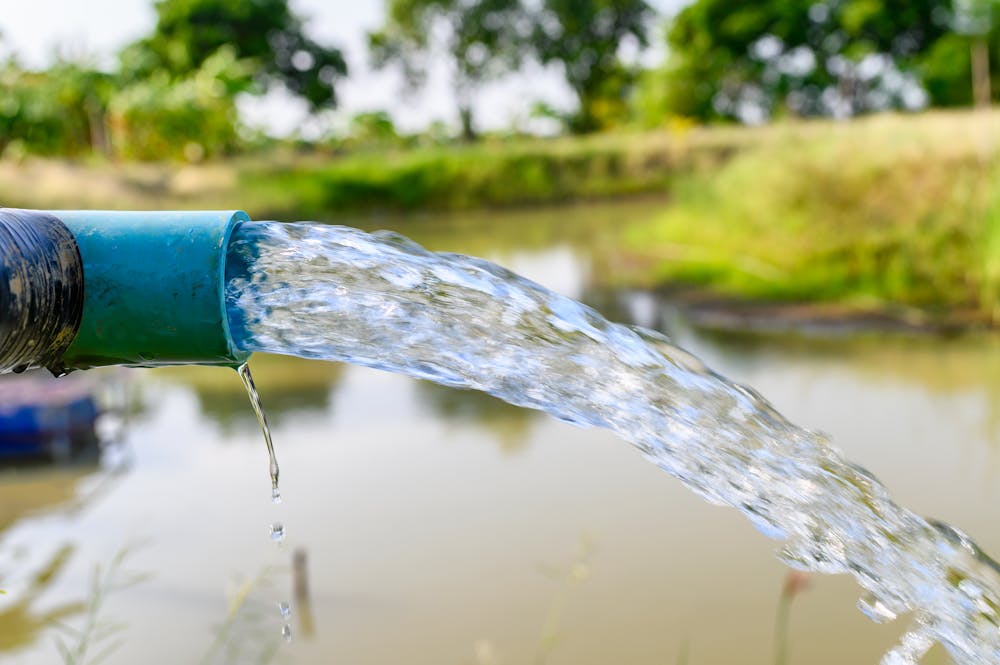 Getting forever chemicals out of groundwater is going to be hard – but necessary.
Mumemories/Shutterstock[24]
Getting forever chemicals out of groundwater is going to be hard – but necessary.
Mumemories/Shutterstock[24]
Worse, current monitoring practices are likely to be underestimating how much PFAS is lingering in the environment, given we usually only track a handful of these chemicals – out of more than 16,000.
Experts have called for[25]:
improved understanding of the range of PFAS embodied in consumer and industrial products […] to assess the environmental burden and develop mitigation measures
The more we look, the more alarming the picture appears. Emerging research has found PFAS in consumer products[26] such as cosmetics, packaging, waterproofing, inks, pesticides, medical articles, polishes and paints, metal plating, pipes and cables, mechanical components, electronics, solar cells, textiles and carpets.
The size and complexity of PFAS contamination suggests we are in for a very long and expensive process to begin cleaning it up – especially given we are still making and using these chemicals.
Read more: Controversial ‘forever chemicals’ could be phased out in Australia under new restrictions. Here’s what you need to know[27]
How should we respond?
To start addressing the problem, here are three important steps.
1. Introduce a “polluter pays[28]” principle.
The introduction[29] of this concept is what forced 3M to pay up in the US. Australia has yet to follow suit, which is why the public has been footing the bill. If we introduce this legal principle, manufacturers will have to take responsibility. This would make it much less attractive for companies to make polluting products – and shift the burden from taxpayers to the companies responsible. Australia’s government is considering pursuing similar legal action[30] against 3M.
2. Set PFAS contamination standards in line with other OECD countries, or better.
Earlier this month, the US implemented the first legally enforceable national drinking water standards[31] for five PFAS compounds and two PFAS mixtures. Australia’s current acceptable drinking water guidelines allow up to 140 times more PFAS in our water than these strict new US standards. In the US, these new standards are drawing new investment[32] in remediation.
3. Take it seriously.
For years, many of us thought all you had to do to avoid PFAS was not to buy nonstick pans. But these chemicals are now everywhere. They’re highly persistent and don’t leave our bodies easily. Every single person on the planet is now likely to have detectable levels of PFAS in their blood[33]. Reducing this dangerous chemical load is going to take a lot of work to clean up existing hotspots, stop further production, and prevent recirculation of PFAS in recycled products or in our food.
The 3M settlement is a good start. But it’s only a start. Tackling this problem is going to be hard, but necessary.
Read more: PFAS: how research is uncovering damaging effects of 'forever chemicals'[34]
References
- ^ focused our attention (www.smh.com.au)
- ^ often carcinogenic (www.iarc.who.int)
- ^ approved by a US court (investors.3m.com)
- ^ would cost (www.pca.state.mn.us)
- ^ recent report (chemsec.org)
- ^ rising healthcare costs (norden.diva-portal.org)
- ^ tip of the iceberg (www.theguardian.com)
- ^ Richard Drew/AP (ph-prod-cdn.aap.com.au)
- ^ wave of lawsuits (www.smh.com.au)
- ^ on and around (www.defence.gov.au)
- ^ remediation (www.defence.gov.au)
- ^ Removing PFAS from public water systems will cost billions and take time – here are ways you can filter out harmful 'forever chemicals' at home (theconversation.com)
- ^ described (www.aph.gov.au)
- ^ Emerging Compounds Treatment Technologies (www.ect2.com)
- ^ intellectual property (www.aph.gov.au)
- ^ PFAS remediation (opecsystems.com)
- ^ West Gate Tunnel (www.theage.com.au)
- ^ mines (www.watoday.com.au)
- ^ waste management facilities (www.watoday.com.au)
- ^ water reclamation plants (www.sciencedirect.com)
- ^ airports (www.perthairport.com.au)
- ^ landfills (www.aph.gov.au)
- ^ toxic hotspots (www.theguardian.com)
- ^ Mumemories/Shutterstock (www.shutterstock.com)
- ^ have called for (www.nature.com)
- ^ consumer products (theconversation.com)
- ^ Controversial ‘forever chemicals’ could be phased out in Australia under new restrictions. Here’s what you need to know (theconversation.com)
- ^ polluter pays (environment.ec.europa.eu)
- ^ introduction (www.epa.gov)
- ^ pursuing similar legal action (www.smh.com.au)
- ^ drinking water standards (theconversation.com)
- ^ new investment (www.bloomberg.com)
- ^ in their blood (chemsec.org)
- ^ PFAS: how research is uncovering damaging effects of 'forever chemicals' (theconversation.com)
Read more https://theconversation.com/chemicals-forever-how-do-you-fix-a-problem-like-pfas-227771