What’s the difference between vegan and vegetarian?
- Written by: Katherine Livingstone, NHMRC Emerging Leadership Fellow and Senior Research Fellow at the Institute for Physical Activity and Nutrition, Deakin University
What’s the difference?[1] is a new editorial product that explains the similarities and differences between commonly confused health and medical terms, and why they matter.
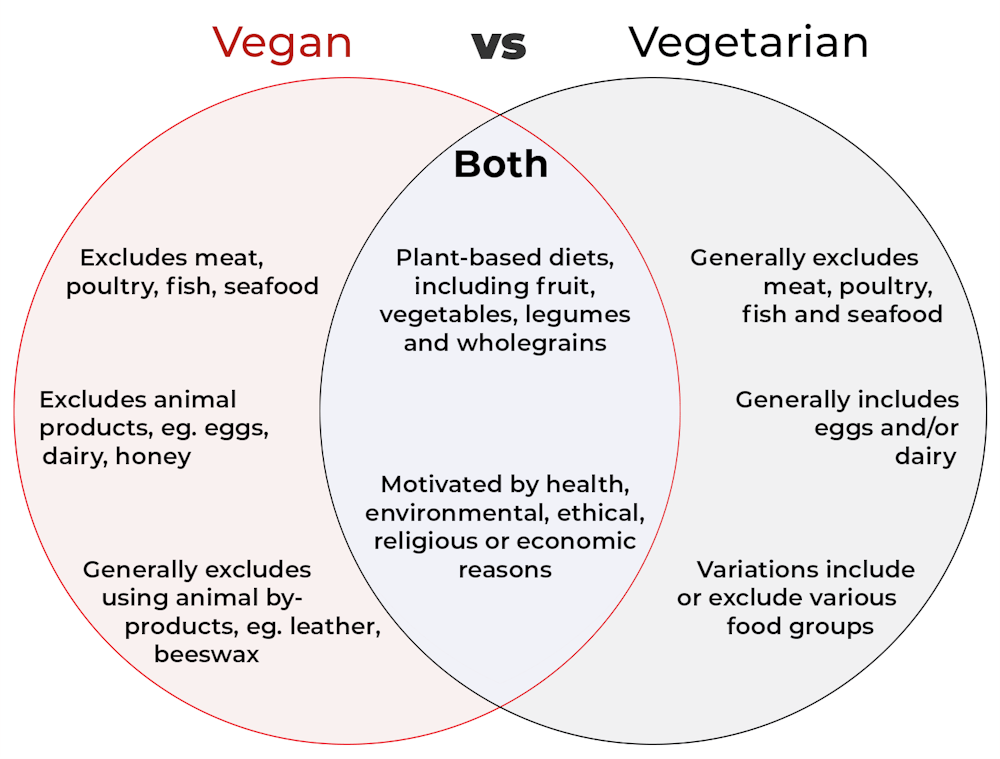
Vegan and vegetarian diets are plant-based diets[2]. Both include plant foods, such as fruits, vegetables, legumes and whole grains.
But there are important differences, and knowing what you can and can’t eat when it comes to a vegan and vegetarian diet can be confusing.
So, what’s the main difference?
What’s a vegan diet?
A vegan diet[3] is an entirely plant-based diet. It doesn’t include any meat and animal products. So, no meat, poultry, fish, seafood, eggs, dairy or honey.
What’s a vegetarian diet?
A vegetarian diet[4] is a plant-based diet that generally excludes meat, poultry, fish and seafood, but can include animal products. So, unlike a vegan diet, a vegetarian diet can include eggs, dairy and honey.
But you may be wondering why you’ve heard of vegetarians who eat fish, vegetarians who don’t eat eggs, vegetarians who don’t eat dairy, and even vegetarians who eat some meat. Well, it’s because there are variations on a vegetarian diet:
a lacto-ovo vegetarian diet excludes meat, poultry, fish and seafood, but includes eggs, dairy and honey
an ovo-vegetarian diet excludes meat, poultry, fish, seafood and dairy, but includes eggs and honey
a lacto-vegetarian diet excludes meat, poultry, fish, seafood and eggs, but includes dairy and honey
a pescatarian diet excludes meat and poultry, but includes eggs, dairy, honey, fish and seafood
a flexitarian, or semi-vegetarian diet, includes eggs, dairy and honey and may include small amounts of meat, poultry, fish and seafood.
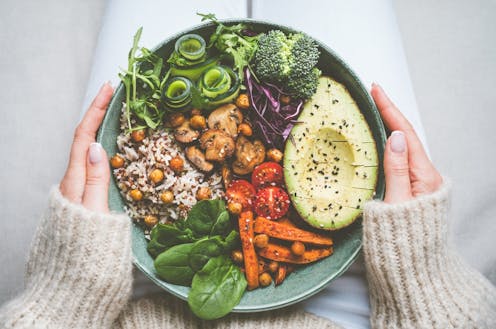
 More than a diet: veganism can form part of someone’s identity.
Shutterstock[12]
So, should I adopt a vegan or vegetarian diet?
If you are thinking about a vegan or vegetarian diet, here are some things to consider:
eating more plant foods does not automatically mean you are eating a healthier diet. Hot chips, biscuits and soft drinks can all be vegan or vegetarian foods. And many plant-based alternatives[13], such as plant-based sausages, can be high in added salt
meeting the nutrient intake targets[14] for vitamin B12, iron, calcium, and iodine requires more careful planning while on a vegan or vegetarian diet. This is because meat, seafood and animal products are good sources of these vitamins and minerals
eating a plant-based diet doesn’t necessarily mean excluding[15] all meat and animal products. A healthy flexitarian diet prioritises eating more whole plant-foods, such as vegetables and beans, and less processed meat, such as bacon and sausages
the Australian Dietary Guidelines[16] recommend eating a wide variety of foods from the five food groups (fruit, vegetables, cereals, lean meat and/or their alternatives and reduced-fat dairy products and/or their alternatives). So if you are eating animal products, choose lean, reduced-fat meats and dairy products and limit processed meats.
References^ What’s the difference? (theconversation.com)^ plant-based diets (link.springer.com)^ vegan diet (link.springer.com)^ vegetarian diet (link.springer.com)^ 2023 review (academic.oup.com)^ study (www.sciencedirect.com)^ analysis (jamanetwork.com)^ meta-analysis (link.springer.com)^ evidence (link.springer.com)^ include (www.sciencedirect.com)^ identity (www.ncbi.nlm.nih.gov)^ Shutterstock (www.shutterstock.com)^ plant-based alternatives (theconversation.com)^ nutrient intake targets (www.eatforhealth.gov.au)^ excluding (theconversation.com)^ Australian Dietary Guidelines (www.eatforhealth.gov.au)
More than a diet: veganism can form part of someone’s identity.
Shutterstock[12]
So, should I adopt a vegan or vegetarian diet?
If you are thinking about a vegan or vegetarian diet, here are some things to consider:
eating more plant foods does not automatically mean you are eating a healthier diet. Hot chips, biscuits and soft drinks can all be vegan or vegetarian foods. And many plant-based alternatives[13], such as plant-based sausages, can be high in added salt
meeting the nutrient intake targets[14] for vitamin B12, iron, calcium, and iodine requires more careful planning while on a vegan or vegetarian diet. This is because meat, seafood and animal products are good sources of these vitamins and minerals
eating a plant-based diet doesn’t necessarily mean excluding[15] all meat and animal products. A healthy flexitarian diet prioritises eating more whole plant-foods, such as vegetables and beans, and less processed meat, such as bacon and sausages
the Australian Dietary Guidelines[16] recommend eating a wide variety of foods from the five food groups (fruit, vegetables, cereals, lean meat and/or their alternatives and reduced-fat dairy products and/or their alternatives). So if you are eating animal products, choose lean, reduced-fat meats and dairy products and limit processed meats.
References^ What’s the difference? (theconversation.com)^ plant-based diets (link.springer.com)^ vegan diet (link.springer.com)^ vegetarian diet (link.springer.com)^ 2023 review (academic.oup.com)^ study (www.sciencedirect.com)^ analysis (jamanetwork.com)^ meta-analysis (link.springer.com)^ evidence (link.springer.com)^ include (www.sciencedirect.com)^ identity (www.ncbi.nlm.nih.gov)^ Shutterstock (www.shutterstock.com)^ plant-based alternatives (theconversation.com)^ nutrient intake targets (www.eatforhealth.gov.au)^ excluding (theconversation.com)^ Australian Dietary Guidelines (www.eatforhealth.gov.au)Read more https://theconversation.com/whats-the-difference-between-vegan-and-vegetarian-225275