Young people hate making phone calls – could it be hurting their careers?
- Written by: Narelle Hopkin (Towie), Academic chair of journalism, Murdoch University
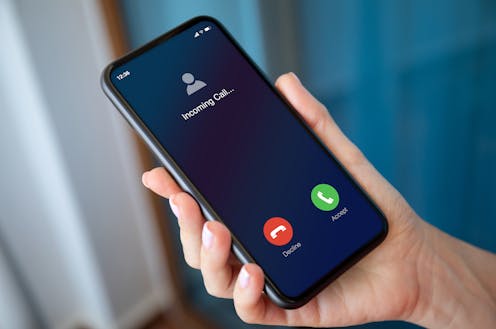
Ironically, younger generations are using smartphones for anything but actual phone calls.
Many people under 40 appear far more comfortable letting their fingers do the talking, using text or images, rather than speech, to communicate over the phone.
A 2023 survey[1] of more than 1,000 Gen Z Australians aged between 18 and 26 found that almost 60% dread making or accepting a phone call. Another from the United States found that 81% of millennials[2] get anxious before making a call.
Like spiders and heights, speaking on the phone – with all its real-time imperfections – is a modern-day phobia and fast becoming a lost art.
So what’s going on, and what impact might it have on young people’s careers?
People feel ambushed by phone calls
I head up the journalism school at Murdoch University[3]. In few other fields of study is the ability to make timely, effective phone calls so critical for success.
To explore young people’s attitudes to phone use further, I carried out an informal survey of 15 students.
Presenting their responses at last year’s Journalism Education and Research Association of Australia conference, I suggested that “telephobia” may be causing the loss of a key communication skill in younger generations.
Among my students, many said they find it rude to receive voice calls out of the blue or without warning.
Some even said that they will not answer voice calls at all, even from a parent. It was easier to let them divert to voicemail, and respond later via text.
Getting a phone call from an unknown number can be even more nail-biting - why is this person calling instead of sending a text? Many said such cold calls trigger a deep fear that something is wrong.
Going on to find out there actually was no emergency made many feel ambushed – and annoyed – that a cold caller had caused unnecessary alarm.
But journalism students may still have an edge. In a podcasting class with intake from various majors, I found that commonplace interview tasks sent anxiety levels much higher than in other classes I have taught in almost a decade lecturing journalism students alone.
Something intangible but important is lost in text
Telephone and face-to-face interviews are well-known in both industry and academia to be more powerful than email.
The skill or confidence to ask uncomfortable questions is a key part of decent interviewing, with phone interviews a second choice to meeting with someone face-to-face.
In-person conversations allow for connection, the building of trust and empathy and the transmission of non-verbal language.
Two studies from Canada back this up, finding people overestimate their persuasiveness[6] when communicating via email. Participants made requests either in person or via email.
Both groups were equally confident about the success of their requests, but those made face-to-face were a staggering 34 times more effective.
The skill needs a greater focus
My colleagues across the Australian media have told me the incoming class of reporters often have more technical prowess than generations past. But many still need reminding to pick up the phone rather than send an email when securing or carrying out interviews.
In the classroom at Murdoch University, we have doubled the amount of time spent teaching the art of interviewing.
We’ve found that students are more successful, and their anxiety is lowered, when early lessons are devoted to practising phone calls. The aim is to try at least 10 phone calls in the classroom, starting with classmates and then moving onto strangers.
But across journalism schools and the wider workforce, it’s likely to remain an uphill battle.
According to communications researchers Leanna Kim and Sang-Hwa Oh, many new technologies hinder rather than promote voice calling[7], which may be causing even greater reliance on new devices.
Telephone anxiety was negatively associated with preference for phone calls, suggesting that using an alternative mode of communication, instead of a phone call, might not be simply a matter of convenience, but an outcome of escaping anxiety.
This is despite research[8] showing an individual’s fear of an interaction being awkward often turns out to be overblown.
We are never going back to the days where the family landline had pride of place stuck in the hallway, and its own special chair to sit on. But voice calls will always play an important role in communication.
Younger generations just need to pick up the phone and let their voices be heard.
References
- ^ survey (www.commbank.com.au)
- ^ 81% of millennials (www.bankmycell.com)
- ^ Murdoch University (handbook.murdoch.edu.au)
- ^ Jonathan Borba/Unsplash (unsplash.com)
- ^ Christina/Unsplash (unsplash.com)
- ^ overestimate their persuasiveness (www.sciencedirect.com)
- ^ hinder rather than promote voice calling (www.researchgate.net)
- ^ research (www.sciencedaily.com)