Europe is likely to stay on heightened alert for years, and sanctions on Russia would only be lifted slowly and conditionally
- Written by: The Times
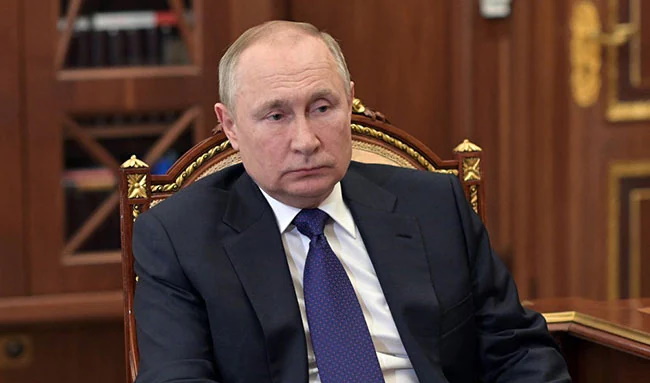
Will Europe remain on “invasion alert” after the war ends?
Even if active fighting in Ukraine stops, Europe’s security posture will not simply revert to pre-2022 normality.
Why alert levels stay high
-
Trust has been broken: Russia’s invasion of Ukraine fundamentally altered how European capitals view Moscow. That mistrust doesn’t disappear with a ceasefire.
-
Military geography has changed: NATO has permanently reinforced its eastern flank (Baltics, Poland, Romania).
-
Doctrine has shifted: European defence planning now assumes high-intensity conflict is possible again.
What this looks like in practice
-
Permanent NATO troop deployments near Russia’s borders
-
Higher defence spending across Europe (Germany, Poland, Nordics)
-
Expanded intelligence, cyber and hybrid-warfare monitoring
-
Faster mobilisation planning rather than reactive defence
NATO will almost certainly maintain forward deployments, especially if Russia:
-
* Retains occupied Ukrainian territory
-
* Refuses arms-control transparency
-
* Keeps large forces positioned near NATO borders
Bottom line: Europe may not be on immediate invasion alert, but it will be on long-term strategic alert, similar to—but more technologically advanced than—the late Cold War.
Will sanctions on Russia be removed?
Not all at once — and possibly not fully
Sanctions are now structural, not just punitive. They’ve been woven into EU and allied policy frameworks.
European Union leaders are already signalling that sanctions relief would be conditional and staged, depending on Russia’s behaviour after the war.
Likely conditions for easing sanctions
Sanctions would only be relaxed if Russia:
-
Withdraws from Ukrainian territory (extent matters greatly)
-
Recognises Ukraine’s sovereignty
-
Commits to binding security agreements
-
Allows reconstruction and reparations mechanisms
-
Stops hybrid actions (cyberattacks, election interference, energy coercion)
Even then:
-
Energy sanctions may stay to avoid renewed dependence
-
Technology and military-use export bans likely remain
-
Financial restrictions may only be partially lifted
Why sanctions may linger
-
Europe has already restructured energy supply chains away from Russia
-
Sanctions now act as leverage for future compliance
-
There is political resistance in many EU states to “rewarding” aggression
Russia may regain some access to trade and finance, but not the pre-2022 integration it once had.
What kind of “peace” matters most?
The outcome matters more than the end date.
| Scenario | European Alert Level | Sanctions Outcome |
|---|---|---|
| Frozen conflict (Korea-style) | Very high | Mostly stay |
| Ceasefire without settlement | High | Minor easing only |
| Negotiated withdrawal | Medium | Gradual rollback |
| Russian defeat & reform | Lower | Significant easing |
A frozen conflict is the most widely expected outcome—and the one that keeps Europe tense.
Long-term reality for Europe
Europe is entering a new security era, regardless of how the war ends:
-
Defence becomes a permanent budget priority
-
Neutral states move closer to NATO structures
-
Strategic autonomy replaces naïve interdependence
-
Russia is treated as a long-term strategic risk, not a partner
For policymakers in Brussels, Berlin and Paris, the lesson has been learned: peace without deterrence is fragile.
In summary
-
Europe will stay on alert, though not necessarily at wartime intensity
-
Sanctions will not be fully lifted quickly, and some may never disappear
-
The war has permanently reshaped European security thinking