Ley and Littleproud have had a prickly relationship – can they negotiate a smooth future?
- Written by: Michelle Grattan, Professorial Fellow, University of Canberra
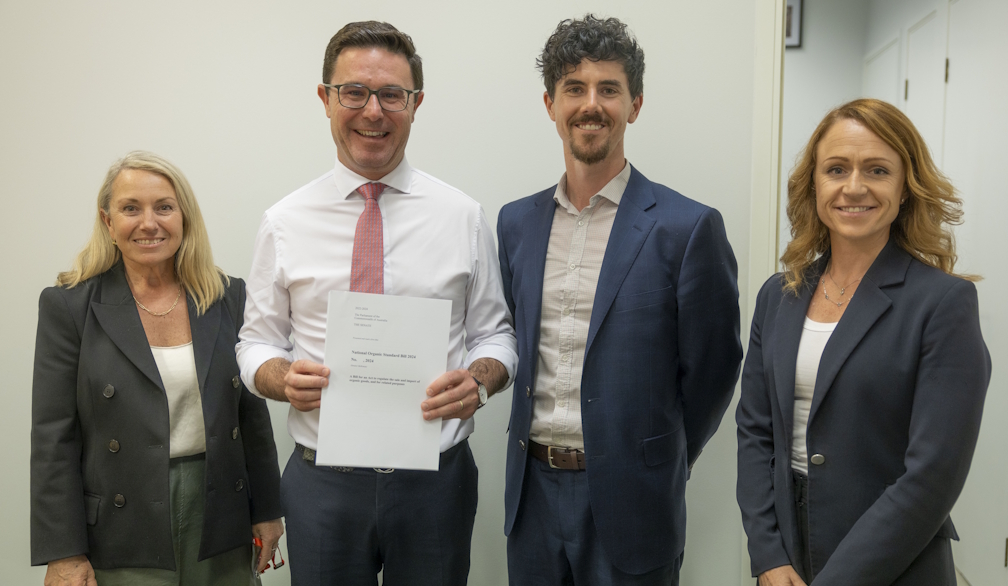
With the future of the Coalition relationship on the line, Nationals leader David Littleproud drove to his Liberal counterpart Sussan Ley’s hometown of Albury this week. They had much to talk about, and it wasn’t going to be easy.
Littleproud and Ley have had a combustible relationship in the past.
After Ley, on the backbench at the time, in 2018 co-sponsored a private member’s bill to restrict live sheep exports, Littleproud, the agriculture minister, said dismissively, “I’m going to predicate my decisions on evidence, not emotion”.
More seriously, when she was environment minister in 2019–22, Ley and Littleproud clashed over the Murray-Darling Basin.
The Nationals leader is father of, and a true believer in, the opposition’s nuclear policy; Ley began as an agnostic on the issue, saying in 2019, “To be honest, I am not strongly for or against nuclear power”.
The two leaders differ in their economic philosophies. Littleproud is what detractors of the Nationals and their predecessor the Country Party used to call an “agrarian socialist”. It was the Nationals who, in the last term, drove the Coalition policy to break up supermarkets that misused their power. Ley is less inclined to industry intervention.
Ley and Littleproud have to find a way for their two parties to continue to share the same house and, assuming they do, how they divide up the rooms, and manage their joint spaces.
Kevin Hogan, the new Nationals deputy, said late Thursday there was a will to sign a Coalition agreement, but certainly there was “a scenario where it doesn’t get signed”.
The Nationals are feeling their power, after an election in which they held almost all their seats and the Liberals were devastated.
Their Senate leader, Bridget McKenzie, who is outspoken and frequently in the media, said this week, “We haven’t had this amount of political clout within the Coalition since the ‘70s”.
How many shadow ministries the Nationals receive is determined on a formula, but central is what posts they obtain.
“There needs to be a very serious conversation heading into any Coalition discussions about the role of the National Party,” she said.
“We don’t need to rush into an agreement, but we do need to make sure it reflects the realities of the election result, which does give greater kudos and say to the National Party within that.”
In a cheeky reference that wouldn’t go down well with some Liberals, McKenzie said, “In our 120-year history, for 16 of these years, we held the treasury portfolio in government”.
The Nationals are not going to hold the Treasury post in opposition. But they will try to have a louder economic voice. (There is speculation they might seek the finance shadow ministry.)
McKenzie referred to the power of party greats Doug Anthony, Ian Sinclair and Peter Nixon in Malcolm Fraser’s government. She could have gone back to the legendary John “Black Jack” McEwen in earlier years.
Back then, the party exercised power through the sheer strength of such individual personalities, and their ability to prevail in battles with colleagues. Looking at the Fraser years, it’s remarkable to think the prime minister used Nixon (who died just before the election, aged 97) in trying to manage a difficult and ambitious senior Liberal, Andrew Peacock, who aspired to the leadership.
The modern Nationals have no such personalities. In recent years the party has also been riven by division over leadership and policy. Littleproud saw off a leadership challenge from Matt Canavan this week.
Canavan lost the ballot but his call for the party to walk away from the target of reducing emissions to net zero by 2050 has yet to be resolved.
All opposition policies are on the table, with Ley and her deputy Ted O'Brien saying they won’t rush the reconsideration of them.
But this shapes as a complicated process, littered with obstacles.
What if the Liberal party and the Nationals came to different conclusions on whether to retain the 2050 commitment? It could be touch and go whether the Nationals ditch it. The Liberals would be courting disaster to do so: that would divide the party and further alienate voters in the Teal-type areas that they need to win back.
If the two parties found themselves at odds on net zero, could they viably stay together in coalition?
The review of the nuclear policy is interlinked with the net zero commitment – nuclear was advanced as a way of getting to the target – and is also fraught. There will be pressure from some Liberals to just junk it. But Littleproud and others within his party would fight hard for it.
The issue of timing is also critical. The opposition doesn’t have the luxury – that it appears to think it has – of going too slowly on the net zero issue.
Energy and climate policy will be central issues over coming months.
The government delayed until beyond the election considering what 2035 emissions reduction target it will submit under the Paris climate agreement. The Climate Change Authority, which must make a recommendation to the government on the target, helpfully said it had more work to do.
But the target must be submitted by September. The government is expected to receive the recommendation from the authority around July. The authority has been consulting on a 65% to 75% reduction. It could recommend a single figure, or (perhaps more likely) a range.
Anywhere between 65% and 75% would be ambitious in practical terms. The 2035 debate will take the argument away from primarily electricity into the areas of industry, transport and agriculture.
If the opposition is to be credible in whatever criticisms it wants to make, it will need to have at least a settled position on the net zero question.
Moreover, in trying to rebuild electoral support, the Liberals in particular require an early confirmed stance on net zero. Climate is a specially important issue with young voters, among whom the party’s support is woeful.
Meanwhile, as all the machinations play out, Jacinta Nampijinpa Price must be giving a thought to what might have been, had she not defected from the Nationals to the Liberals in a misjudged bid to become Liberal deputy.
She may regard the Liberals as her natural home, as she says, but if she’d stayed she might have become Nationals deputy leader this week (previous deputy Perin Davey lost her seat). That would have had her well placed to pursue her portfolio ambitions, backed by Littleproud. But who will be her champion now?
In jumping ship, Price has found herself adrift, for the moment at least.