


What it means when your child says they’re bored in class, and how you can help
- Written by: Amanda Bourgeois, Postdoctoral researcher in the UQ Learning Lab, The University of Queensland
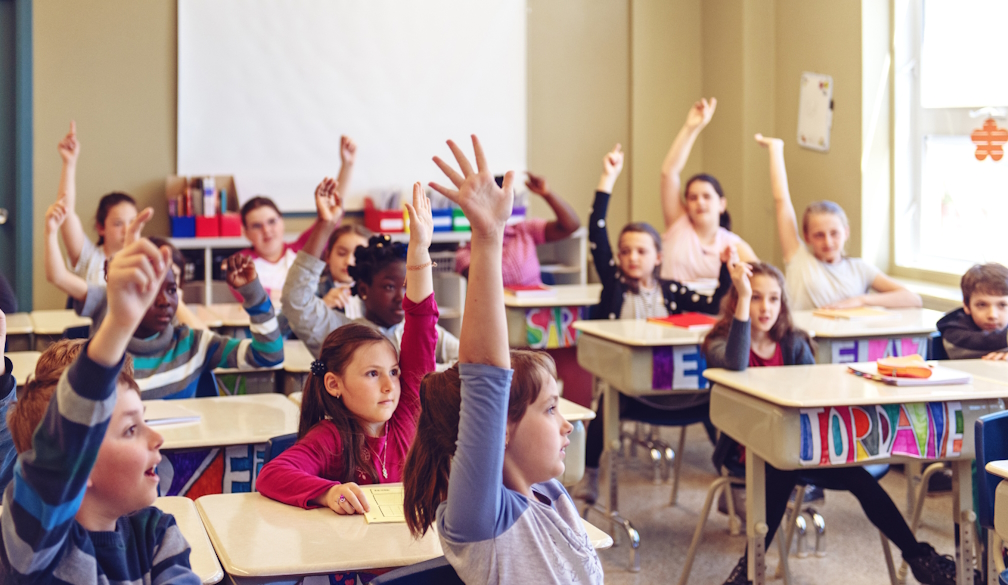
Have you ever asked your child how school was today, only to be told it was “boring”?
It’s a conversation sadly all-too-familiar to a lot of parents. Many are left wondering why and what they can do to help.
It’s important to understand why your child may be feeling bored at school. Here are some possibilities to consider.
Not every aspect of school is engaging
Boredom at school isn’t uncommon. Remember, a child’s learning journey is jagged, not linear[1]. Their learning may progress quickly during some periods, and less so at other times. Sometimes they will be bored.
Research has found Year 9 students reported feeling bored during nearly half of class time[2], on average, while younger students report feeling bored during about a third of class time[3].
Our own research, which involved surveying 412 students in Year 10[4] about their emotions, revealed boredom was the most commonly reported emotion among participants.
This is concerning because students need to be emotionally invested to learn well[5].
As we argued in our paper[6], it’s possible there’s a need for some teachers to develop more stimulating lesson plans, and work more with students to find ways to motivate and engage them. Collecting feedback and working with their students to minimise classroom boredom could help some teachers.
Young people are growing up in an era where – thanks to technology – boredom in spare time is rare. This can be quite challenging for teachers, who generally want to encourage their students to reflect, ponder and contemplate.
But research[7] has found closer student-teacher relationships, creating safe and supportive classrooms[8], and linking learning to real-world contexts relevant to students can often mitigate negative emotions like boredom.
The greater the control the student has over their learning – and the better they see the value of it – the more motivated they’re likely to be[9].
But lesson content is only part of the picture.

Is your child bored some or all of the time?
If your child is feeling bored in just one class, or one subject, then it could be the lesson content.
But if your child is consistently complaining that all classes and all school is boring – and you’ve noticed their grades are declining – there may be more to consider, such as:
- the possibility of an underlying learning difficulty, such as dyslexia (which relates to reading) or dyscalculia (which relates to maths and numbers)
- the possibility of hearing or vision impairment
- the possibility your child is “gifted”, meaning they learn much faster than their peers.
If you suspect any of these, talk to your GP, and to your child’s teacher.
Is boredom masking other emotions?
When children say they are bored, they might be struggling to identify and express more complex feelings[11] such as sadness or anxiety.
So it’s worth considering if there are friendship issues happening in the playground, or if there is something else going on emotionally for your child.
These stressors can occupy your child’s thoughts in the classroom, taking attention away from learning.
By helping children to understand and articulate their emotions, we can provide them the tools to manage these experiences more effectively.
Some schools offer programs that help children identify their emotions and learn social, emotional and behavioural regulation skills.
Children with good social emotional skills are likely to do better on a range of interpersonal[12] and academic outcomes[13], which can also benefit parents, teachers and the school in general.
So what should parents do?
Talk openly with your child. Ask more specific questions about their day, instead of just “how was school?”. Instead, you can try questions like:
- what was the most interesting thing you learned at school today?
- can you tell me about something you enjoyed doing at school today?
- was there anything that made you feel frustrated or bored today?
- what do you wish you could change about your day?
- who did you play with today?
- if you were the teacher for the day, what would you do differently?
- what feedback did you receive from your teacher on your work today?
Find out what they mean when they say they’re bored at school, and when they feel bored.
Consider having them assessed for possible learning difficulties, and their eyes and ears checked.
Find out if there any problems with friends, or possible anxieties lurking below the surface.
If your child is particularly high achieving academically, discuss this with the school. Your child may be eligible for further assessment and extension support.
Find ways to relate what your child is learning in school to their own lives and interests.
Consider how you can strengthen your child’s relationship with their teacher, and talk to the teacher, too. They might be able to make simple adjustments to support your child’s motivation and engagement.
References
- ^ jagged, not linear (doi.org)
- ^ bored during nearly half of class time (www.frontiersin.org)
- ^ a third of class time (www.journals.uchicago.edu)
- ^ 412 students in Year 10 (www.frontiersin.org)
- ^ emotionally invested to learn well (www.learninglandscapes.ca)
- ^ paper (www.frontiersin.org)
- ^ research (www.frontiersin.org)
- ^ safe and supportive classrooms (soldalliance.org)
- ^ more motivated they’re likely to be (doi.org)
- ^ Sajee Rod/Shutterstock (www.shutterstock.com)
- ^ struggling to identify and express more complex feelings (www.frontiersin.org)
- ^ interpersonal (doi.org)
- ^ academic outcomes (doi.org)









