I feel sick. How do I know if I have the flu, COVID, RSV or something else?
- Written by: Natasha Yates, General Practitioner, PhD Candidate, Bond University
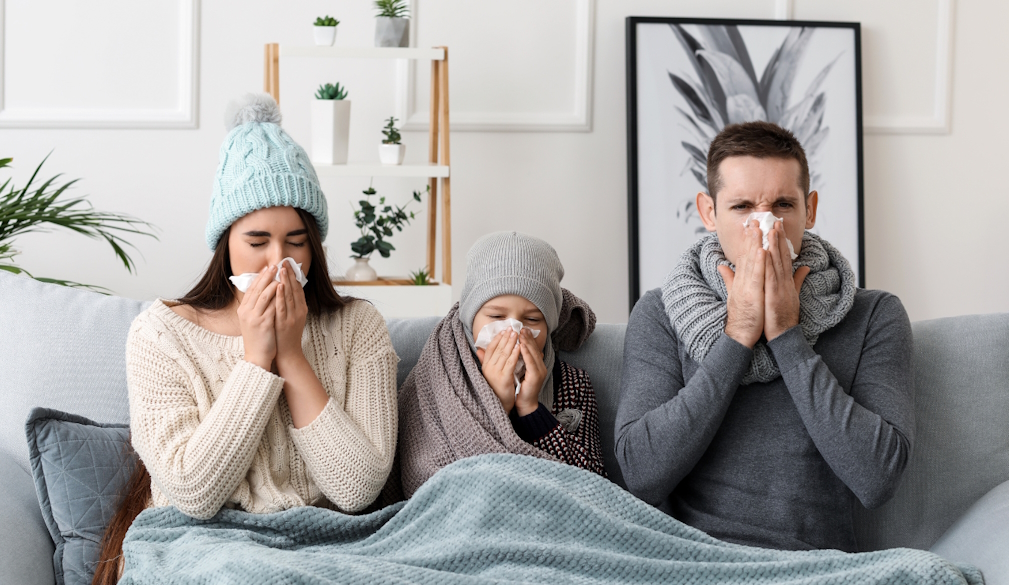
You wake with a sore throat and realise you are sick. Is this going to be a two-day or a two-week illness? Should you go to a doctor or just go to bed?
Most respiratory illnesses have very similar symptoms at the start: sore throat, congested or runny nose, headache, fatigue and fever. This may progress to a dry cough.
Best case scenario is that you have “a cold[1]” (which can be any one of hundreds of viruses, most commonly rhinovirus), which is short-lived and self-limiting.
But some respiratory illnesses can be much more serious. Here is a brief guide to some important bugs to know about that are circulating this winter, and how to work out which one you have.
Respiratory syncytial virus (RSV)
For most people an RSV infection will feel like “a cold” – annoying, but only lasting a few days.
However, for babies, older adults and people with immune issues, it can lead to bronchiolitis[2] or pneumonia, and even become life-threatening.
RSV isn’t seasonal, which means you are just as likely to get it in summer as in winter. However, it is highly contagious so we noticed it disappearing almost completely[3] during COVID lockdowns.
There is now a rapid-antigen test (RAT) for RSV[4] which also checks for influenza and COVID, and is the best way of finding out if RSV is what is causing symptoms.
Recently, a preventative immune therapy has become available for high risk babies (nirsevimab[5]) and there are also vaccines for higher risk adults[6]. Nirsevimab is also available to all babies for free in Western Australia[7] and Queensland[8].
But there are no specific treatments. Adults who get it simply have to ride it out (using whatever you need to manage symptoms[10]).
Babies and higher risk patients need to present to an emergency department if they test positive for RSV and are also looking or feeling very unwell (this might mean rapid shallow breathing, fevers not coming down with paracetamol or ibuprofen, a baby not feeding, mottled-looking skin, or going blue around the mouth).
If a patient has developed a bronchiolitis or pneumonia, they may need to be hospitalised.
Influenza
Once you have had the “true flu” (influenza), you will find it frustrating when people call their sniffly cold-like symptoms a “flu”.
Influenza infections generally start with a sore throat and headache which quickly turns into high fevers, generalised aches and excessive fatigue. You feel like you have been hit by a truck and may struggle to get out of bed. This can last a week or more, even in people who are generally fit and healthy.
Influenza is a major public health issue internationally, with 3–5 million cases of severe illness and 290,000 to 650,000 respiratory deaths annually[11].
People who are at greater risk of complications[12] from influenza include pregnant women, children under five, adults aged 65 and over, First Nations peoples, and people with chronic or immunosuppressive medical conditions. For this reason, annual vaccination is recommended and funded[13] for vulnerable people.
Vaccination is also readily available for all Australians who want it[14], through pharmacies as well as medical clinics, usually at a cost of less than A$30. In some states[15], it’s free for all residents.
Influenza is seasonal, with definite peaks in the winter months. This is why vaccines are offered from early autumn.
If you think you may have influenza, there are now home-testing RATs: all current influenza RATs are in combination with COVID RATs, as the symptoms overlap.
Treatment for most people is to manage symptoms and try to avoid spreading it around. Doctors can also prescribe antivirals[17] to vulnerable patients; these work best if started within 48 hours of symptoms.
COVID
It has been less than five years since COVID-19, caused by SARS-CoV-2, started to spread around the world in pandemic proportions. Although COVID is no longer a public health emergency[18], it still causes more deaths than influenza and RSV combined[19].
Unlike RSV and influenza, only those aged over 70[20] are in a high-risk age group for COVID. Other factors besides age[21] may put you at higher risk of becoming very unwell when infected by this virus. This includes having other respiratory diseases (such as asthma or chronic obstructive pulmonary disease, also known as COPD), diabetes, cancer, kidney disease, obesity or heart disease.
Unlike most respiratory viruses, SARS-CoV-2 tends to set off inflammation beyond the respiratory system. This can involve a range of other organs including the heart, kidneys and blood vessels.
Although most people are back to their usual work or study after a week or two, a significant proportion go on to experience extended symptoms such as fatigue, breathlessness, brain fog and mood changes. When these last more than 12 weeks[22], without any other explanation for symptoms, it’s called long COVID[23].
COVID vaccines can prevent serious illness and have been monitored[25] for several years now for their safety and effectiveness. Current vaccination recommendations are based on age and immune status[26]. It’s worth discussing them with your doctor if you are unsure whether you would benefit or not.
Antivirals[27] can treat COVID in higher-risk people who contract it, whether vaccinated or not.
Specific advice about what to do if you test positive on a RAT will vary according to your current state guidelines and workplace, however the general principles[28] are always: avoid spreading the virus to others, and give yourself time to rest and recover.
What if it’s not one of those?
So you’ve done your combined RSV/flu/COVID RAT and the result is negative. But you still have symptoms. What else could it be?
More than 200 different viruses can cause cold and flu symptoms, including rhinovirus (mentioned above), adenovirus and sometimes even undefined pathogens[29].
If an illness progresses to a cough which will not go away, and/or you start coughing up sputum, this could be a bacterial infection, such as pertussis (whooping cough), streptococcus pneumoniae, haemophilus influenzae or moraxella catarrhalis. So it’s worth getting assessed by a GP[30] who may do a chest Xray and/or test your sputum[31], particularly if they suspect pneumonia.
You also may also start out with what is clearly a viral infection but then get a secondary bacterial infection later. So if you are getting more unwell over time, it’s worth getting tested, in case antibiotics will help.
However, taking antibiotics for a purely viral illness will not only be useless, it can contribute to harmful antibiotic resistance[32] and give you unwanted side effects.
References
- ^ a cold (lungfoundation.com.au)
- ^ bronchiolitis (www.rch.org.au)
- ^ disappearing almost completely (pubmed.ncbi.nlm.nih.gov)
- ^ rapid-antigen test (RAT) for RSV (www.tga.gov.au)
- ^ nirsevimab (www.schn.health.nsw.gov.au)
- ^ vaccines for higher risk adults (ncirs.org.au)
- ^ Western Australia (www.health.wa.gov.au)
- ^ Queensland (www.health.qld.gov.au)
- ^ polkadot_photo/Shutterstock (www.shutterstock.com)
- ^ manage symptoms (www.mayoclinic.org)
- ^ 290,000 to 650,000 respiratory deaths annually (www.who.int)
- ^ greater risk of complications (immunisationhandbook.health.gov.au)
- ^ recommended and funded (www.health.gov.au)
- ^ all Australians who want it (www.health.gov.au)
- ^ some states (www.vaccinate.initiatives.qld.gov.au)
- ^ 89stocker/Shutterstock (www.shutterstock.com)
- ^ prescribe antivirals (theconversation.com)
- ^ public health emergency (www.health.gov.au)
- ^ more deaths than influenza and RSV combined (www.abs.gov.au)
- ^ aged over 70 (www.health.gov.au)
- ^ factors besides age (www.cdc.gov)
- ^ more than 12 weeks (aci.health.nsw.gov.au)
- ^ long COVID (www.healthdirect.gov.au)
- ^ Gorodenkoff/Shutterstock (www.shutterstock.com)
- ^ monitored (pubmed.ncbi.nlm.nih.gov)
- ^ based on age and immune status (www.health.gov.au)
- ^ Antivirals (www.health.gov.au)
- ^ general principles (www.health.gov.au)
- ^ undefined pathogens (www.ncbi.nlm.nih.gov)
- ^ getting assessed by a GP (www.racgp.org.au)
- ^ test your sputum (www.rcpa.edu.au)
- ^ antibiotic resistance (www.nps.org.au)