Tankers are returning to Hormuz — then another ship is hit
- Written by: The Times
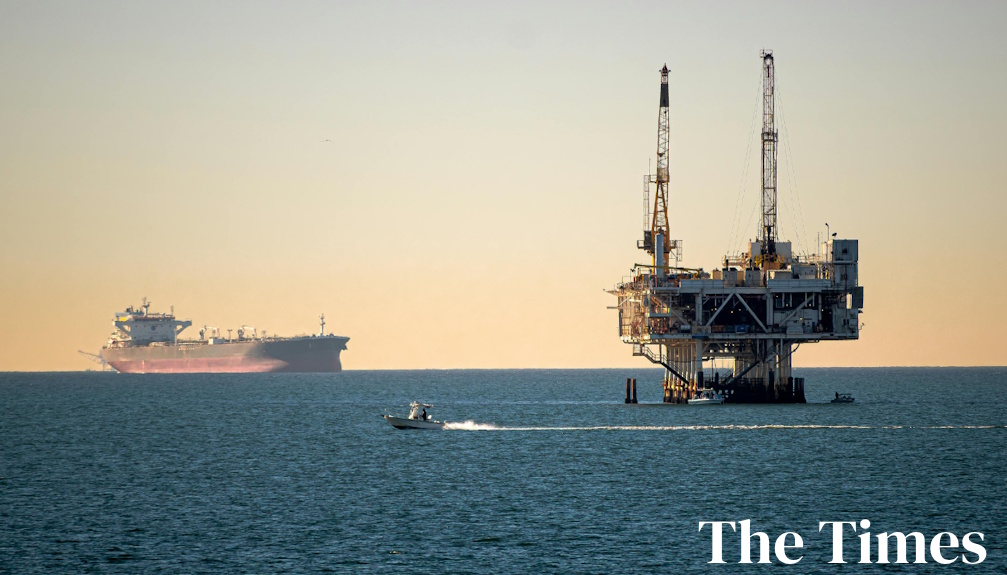
Oil prices are falling and ships are beginning to return to the Strait of Hormuz as diplomatic efforts raise hopes that one of the world's most important energy routes can be restored. Then another tanker was struck. For Australia, the contradiction explains why cheaper crude oil does not yet mean the fuel crisis is over.
Something important is happening in the Strait of Hormuz.
Ships are beginning to return.
Data from Kpler reported by Reuters shows 10 commodity vessels passed through the Strait on Wednesday, up from eight the previous day.
Among the inbound vessels were two medium-range fuel tankers and an LPG carrier.
It is hardly a return to normal. The 10-day moving average is about 15 vessels and traffic remains dramatically below the levels seen before the Iran conflict disrupted one of the world's most important energy corridors.
But after months in which the overriding story has been ships avoiding Hormuz, even a modest increase matters.
Then came the reminder of why they left.
A tanker travelling through the Strait was struck by an unidentified projectile and caught fire, according to Britain's UK Maritime Trade Operations.
The fire was extinguished.
For global energy markets — and Australia — the incident could hardly have come at a more revealing moment.
The oil market thinks things are getting better
Brent crude has been falling.
On Thursday it dropped another US$1-plus, reaching around US$86.48 a barrel during trading.
That decline has extended across several sessions.
The reason is increasingly clear.
Markets are anticipating that diplomacy involving Iran, Oman and Qatar could reduce the confrontation and permit substantially more oil to move through Hormuz.
Iran and Oman are working towards arrangements governing the Strait, while Qatar is involved in broader diplomatic efforts concerning Iran and the United States.
The possibility of restoring one of the world's great petroleum arteries naturally changes expectations about future supply.
And oil markets trade expectations.
The difficulty is that Australian motorists cannot put expectations into their fuel tanks.
They need actual petrol and diesel.
The ships matter more than the oil price
This is why Australians watching the crisis should increasingly pay attention to tanker movements rather than simply Brent crude.
There are effectively two Hormuz stories developing simultaneously.
The financial story says conditions are improving.
Oil is falling.
Diplomacy is progressing.
A framework for managing Hormuz is emerging.
The physical story is considerably less reassuring.
Traffic remains heavily depressed.
Shipowners remain exposed to attack.
Insurers must continue pricing extraordinary geopolitical risk.
And another tanker has just been struck.
Until those two stories converge, declaring the fuel crisis over would be premature.
One tanker attack can change the calculation
A tanker is an enormously valuable commercial asset.
So is its cargo.
But the commercial calculation extends much further.
Owners have crews to protect.
Charterers need certainty.
Banks finance ships and cargoes.
Insurers have to decide whether they are prepared to cover the voyage and, if so, at what price.
Oil traders need to know whether cargoes will arrive.
Refiners need reliable feedstock.
Buyers need predictable delivery schedules.
An agreement between governments can improve that calculation enormously.
But continued attacks can undermine it just as quickly.
That is why today's tanker incident matters even though the vessel survived and the fire was extinguished.
The question is not simply how badly one ship was damaged.
The question is what every other shipowner contemplating a Hormuz voyage thinks when reading the incident report.
Australia is a long way from Hormuz — but not from its consequences
Australia does not need to import Iranian crude oil for Hormuz to matter.
Our economy is deeply integrated into the Asian petroleum market.
Australia imports substantial quantities of refined petroleum products.
The prices paid for petrol and diesel are heavily influenced by Asian refined-fuel benchmarks.
That means disruption to Middle Eastern production, refining and shipping eventually reaches Australian households and businesses through the international petroleum market.
Diesel is particularly important.
It moves trucks.
It powers agricultural machinery.
It is consumed by mining and construction.
It supports remote communities and backup electricity generation.
Jet fuel connects Australia's cities with each other and with the world.
Petrol keeps households mobile.
Fuel is therefore not simply another consumer product.
It is an input into much of the Australian economy.
The real-world evidence remains uncomfortable
There is another reason to remain cautious.
Reuters analysis published Thursday found that Asian crude imports remain substantially below the levels recorded before the Iran conflict.
Kpler estimates Asia will import around 23.12 million barrels a day during August.
Before the conflict, the comparable average was approximately 26.91 million barrels a day.
That is a difference approaching four million barrels every day.
More importantly, the data raises questions about claims that enormous quantities of Middle Eastern petroleum have already resumed flowing through Hormuz.
Tracking data cited by Reuters indicates flows remain considerably lower.
That matters because Asia is Australia's petroleum neighbourhood.
If Asia is receiving substantially less crude than before the conflict, the regional petroleum system has not returned to normal.
Some ships may be invisible
There is an important qualification.
Shipping data is imperfect.
Some vessels operating around Hormuz may turn off their Automatic Identification System transponders.
That makes them difficult to track using conventional commercial vessel-monitoring systems.
Actual movements may therefore be higher than publicly visible movements.
But that itself tells us something about the environment.
Normal international commerce does not ideally operate through one of the world's most important waterways with ships deliberately attempting to become difficult to track.
A truly normalised Hormuz would involve large numbers of vessels moving openly, predictably and insurably through internationally recognised shipping lanes.
We are not there yet.
Iran's blacklist adds another complication
Iran has also produced a blacklist of 45 vessels it says breached its maritime rules.
Reuters reported that at least three Indian refiners and one major international energy company intend to avoid vessels appearing on that list.
Iran has threatened measures including fines, detention and cargo seizure.
This introduces another risk into the system.
A vessel may be physically capable of travelling through Hormuz but commercially unattractive because a refiner, trader, charterer or insurer does not want exposure to the additional risk.
The world therefore needs more than an open shipping lane.
It needs a shipping lane that commercial operators are prepared to use.
Oil below US$90 is nevertheless good news
None of this diminishes the significance of falling crude prices.
Brent around the mid-US$80s is considerably better for Australia than crude above US$100.
If those lower prices persist, they should eventually contribute to lower petroleum costs.
But crude is only one component.
Australia ultimately needs lower prices for the finished petroleum products we consume.
That means petrol.
Diesel.
Jet fuel.
And those products depend on functioning refineries, available tankers, affordable insurance and reliable shipping routes.
The refinery problem has been one of the less visible consequences of the conflict.
The world can theoretically have enough crude oil while still experiencing tight supplies of the products made from it.
That is why the bowser can remain stubbornly expensive even while headlines report falling crude prices.
The next test is sustained traffic
One day's increase from eight commodity vessels to 10 is encouraging.
What matters now is whether it becomes eight, 10, 15, 20 and eventually a sustained return towards normality.
That would be meaningful.
It would indicate that shipowners are regaining confidence.
It could help bring insurance premiums down.
More crude could reach Asian refineries.
More refined product could enter regional markets.
Competition for available cargoes could ease.
Eventually, some of those benefits should reach Australia.
But another sequence is also possible.
More ships enter the Strait.
More vessels are attacked.
Owners retreat again.
Insurers reassess the risk.
Traffic falls.
Oil rises.
The incident reported today is therefore not merely another maritime security story.
It is a test of whether the emerging Hormuz recovery can survive contact with the reality of the conflict.
Australia should not confuse lower prices with restored security
There is a broader lesson here for Australia.
Energy security cannot be measured solely by the international crude price.
Oil can fall because traders believe something will happen months or weeks ahead.
Physical fuel security depends upon what is happening now.
Are tankers moving?
Are refineries operating?
Are petroleum inventories recovering?
Are shipping premiums falling?
Are Asian petrol and diesel supplies becoming more plentiful?
Can Australian importers reliably secure cargoes?
Those are increasingly the indicators that matter.
The distinction is particularly important after National Cabinet decided Australia should remain at Level 2 under its fuel-security arrangements despite improving domestic stocks.
Australia is therefore doing something sensible: hoping for international improvement while continuing to prepare for disruption.
The Times View
The latest developments in Hormuz contain both the best and worst of the current energy story.
Ten commodity vessels passing through the Strait instead of eight is progress.
Brent crude falling towards US$85 is progress.
Diplomatic efforts involving Iran, Oman and Qatar are progress.
But another tanker being struck while travelling through Hormuz is a reminder that none of those developments has yet restored normality.
Markets can change their minds in seconds.
Shipowners cannot move billion-dollar vessels and their crews on optimism alone.
For Australia, the measure of success is therefore no longer another diplomatic announcement or another fall in Brent.
It is sustained physical recovery.
More tankers must pass safely through Hormuz.
Asian crude imports must recover.
Refineries need dependable supplies.
Petrol, diesel and aviation-fuel markets need to loosen.
Shipping and insurance costs need to fall.
Only then will the international petroleum recovery begin looking like genuine Australian fuel security.
Oil markets are betting that Hormuz is reopening.
The tankers are only beginning to test whether they are right.