Albanese was naive to think Hamas wouldn’t welcome Palestinian recognition
- Written by: Michelle Grattan, Professorial Fellow, University of Canberra
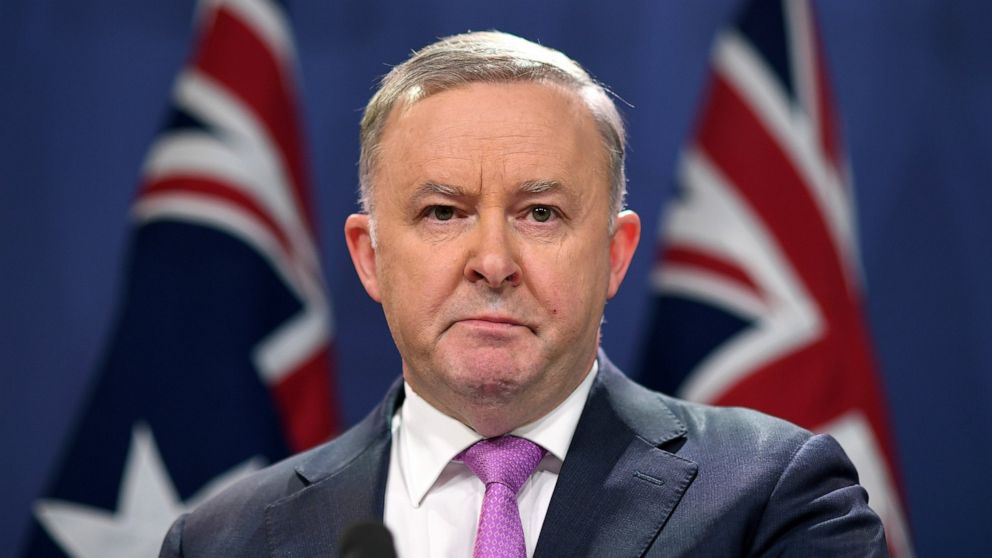
If Anthony Albanese thought the government’s decision to recognise a Palestinian state would be a relatively smooth operation in terms of politics, he’s had a quick wake-up call.
Following Hamas’ predictable welcoming of his action, the prime minister now finds himself deep in a controversy that has exposed a degree of naivety in how he and his government are conducting foreign policy.
The pros and cons of recognising a Palestinian state at this point always involved matters of judgement rather than being straightforward.
Israel’s appalling overreach in Gaza invited the response from France, Britain, Canada and now Australia. As Chris Luxon, the conservative leader of New Zealand (now also considering recognition) put it, Israeli Prime Minister Benjamin Netanyahu has “lost the plot”.
On the other hand, it was obvious Hamas could argue recognition of Palestine just showed what its October 2023 attack had achieved. And there was no reason to think Israel would be influenced by what these countries did. After all, most countries globally have already recognised a state of Palestine. It appears only the United States holds the power to sway Israel.
The pressure on Albanese to recognise a Palestinian state mounted over months. It fitted with his own inclinations, held from when he was a young radical, and with Labor’s rank-and-file stance, reflected in the party platform. Foreign Minister Penny Wong had been leaning in for a year.
Crucially, the worse the conflict in Gaza became, the more a sizeable section of the public seemed sympathetic to making the gesture. Then came the stands by the three like-minded countries.
In the end, the prime minister just seems to have wanted to get it done. “We just can’t keep going the same way. The world is watching. People are sick of it. It’s horrific watching that,” he said this week.
The stipulations he spelled out just weeks ago, when he signalled recognition was not imminent, were no longer preconditions.
He’d said then, “How do you exclude Hamas from any involvement there? How do you ensure that a Palestinian state operates in an appropriate way which does not threaten the existence of Israel?”
Instead, in announcing recognition this week, Albanese relied on assurances from the Palestinian Authority, in its public statements and a phone call he had with its leader Mahmoud Abbas. He also took to heart the Arab League backing a call for Hamas to disarm.
Australian recognition, which Albanese said would come at the United nations General Assembly in September, became unconditional.
Here’s where the naivety kicks in. If he’s really relying on the Palestinian Authority’s word, that is flawed, on two grounds.
History indicates its word is hardly its bond. And even if it were, there is no reason to think it could deliver its various undertakings, including its own reform. Moreover, the assumption of its dominance in a post-war Gaza depends on a lot of “ifs”. One of these “ifs” is the expectation of elections. But even then, Hamas might find a way to survive and win.
Things got messy for Albanese when Hamas reacted to his announcement. The prime minister had predicted that “Hamas will be totally opposed to this decision” on the grounds it didn’t support a two-state solution.
That always seemed unlikely. Hamas is taking what it can get at the moment.
The first reaction was from Hamas co-founder Hassan Yousef, who lauded the “political courage” of the decision, in a statement from his office to the Sydney Morning Herald.
Hamas would later deny any statement could have been issued by Yousef, something quickly picked up by Albanese, who warned the media against Hamas “propaganda”.
Then in a formal statement to the ABC, Hamas praised the move (saying it was “better late than never”) but wanted more. “We call on the Australian government to translate this recognition into concrete actions – by exerting diplomatic pressure to end the Israeli occupation.”
This will feed into the calls from the left to impose sanctions on Israel. (The government has already sanctioned two extreme-right Israeli ministers.)
The recognition announcement has closed off one issue, but opened others.
The opposition has been predictable in its rejection of the recognition. But the shadow cabinet’s decision to go further and say that in office it would reverse the recognition, rather than leaving that decision for the future, was unnecessary and unwise. By the time the Coalition finally gets back into power, who knows what the situation will be in the Middle East?
Incidentally, Opposition Leader Sussan Ley’s choice of Michaelia Cash as shadow foreign minister was a strange one. Maybe Cash, who is the Liberal leader in the Senate, pitched very hard for it. Whatever the reason, she is an unnuanced political operator in a portfolio that often requires nuance.
The Albanese government’s decision on recognition has put further distance between Australia and the Trump administration. While the PM might think the dysfunction in this relationship doesn’t matter much because of Australians’ low regard for Trump, it remains important to get it back on an even keel.
That is something Albanese should address when he is in the US in September – when he has promised to meet Abbas – whether or not he lands a meeting with Trump himself.