Residential Property Price Growth in the Regions
- Written by: The Times
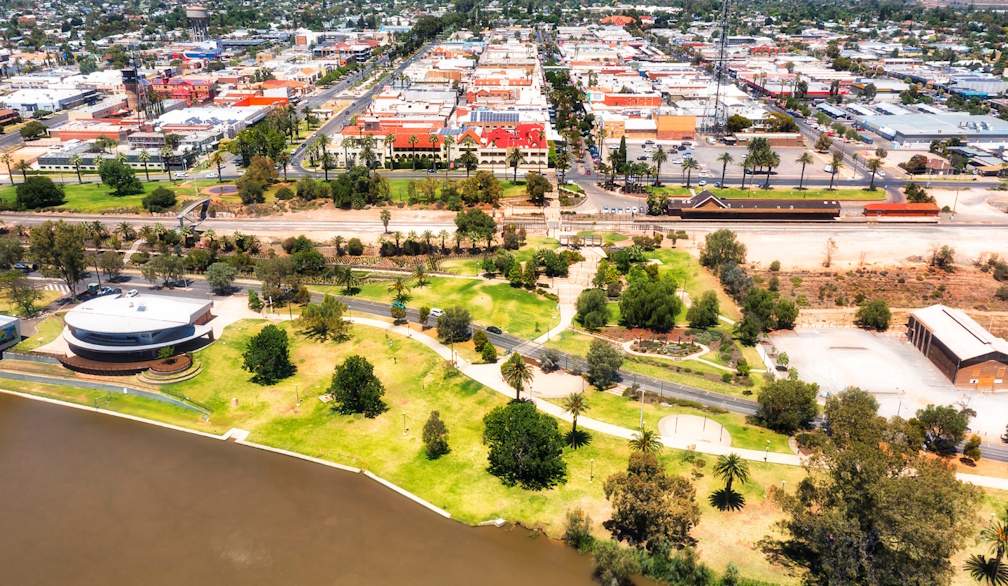
For decades the Australian property discussion revolved around Sydney, Melbourne and, increasingly, Brisbane. The assumption was simple: capital cities were where the jobs were, where the money flowed and where property values would continue to outperform. Yet over recent years a profound shift has emerged. Regional Australia is no longer merely the “cheaper alternative” to city living. In many cases it has become one of the strongest performing sectors of the residential property market.
From coastal lifestyle towns to inland service centres and regional cities linked to agriculture, mining, health and education, residential property prices across the regions have experienced remarkable growth. Some areas once dismissed as slow-moving markets are now recording demand levels that would have been difficult to imagine a decade ago.
The reasons are numerous and interconnected. Internal migration, affordability pressures in the capitals, government decentralisation, changing work habits and investor demand have all combined to reshape regional Australia’s property landscape.
The result is that many regional communities are now at the centre of Australia’s housing conversation.
Australians Are Moving Out Of The Capitals
One of the biggest drivers of regional property growth has been internal migration.
Australians are increasingly leaving major metropolitan areas in search of affordability, lifestyle and space. For many families, the arithmetic has become impossible to ignore. A modest suburban house in Sydney or Melbourne can cost several million dollars in some areas, while a substantial family home in a regional centre may still be obtainable for a fraction of that amount.
The shift accelerated during the pandemic years, but it did not disappear afterwards. Instead, it evolved into a long-term trend.
Workers discovered they could perform many jobs remotely. Businesses realised employees did not always need to sit in a CBD office tower five days per week. Technology reduced the tyranny of distance. Improved internet infrastructure and telecommunications made regional living more practical for professionals.
Suddenly, living near the beach in a regional coastal town, or in a country centre with larger blocks and lower living costs, became realistic for many Australians.
Regional Queensland, northern New South Wales, parts of Victoria, Tasmania and Western Australia all experienced substantial inflows of new residents.
The pressure this created on local housing markets was immediate.
In towns where supply had traditionally been stable and predictable, buyer demand surged. Rental vacancies tightened sharply. Local buyers often found themselves competing against city purchasers armed with larger budgets after selling metropolitan homes.
Prices inevitably followed.
Housing Is Still Cheaper In Many Regional Areas
Despite significant growth, one major attraction remains: regional property is often still substantially cheaper than metropolitan housing.
That relative affordability continues to attract both owner-occupiers and investors.
For younger Australians, regional markets may represent one of the few remaining realistic pathways to home ownership. Instead of carrying overwhelming debt burdens to buy a small apartment in a capital city, many buyers can secure detached housing in regional areas.
The value proposition can be compelling.
Larger land sizes, garages, gardens, multiple bedrooms and proximity to nature all appeal to buyers who have become disillusioned with high-density urban living.
Regional housing also offers retirees and downsizers an opportunity to unlock equity accumulated in city properties. Selling a metropolitan home and relocating to a regional centre can significantly improve retirement finances while delivering a more relaxed lifestyle.
Importantly, cheaper does not necessarily mean weak growth.
Many regional markets have demonstrated strong capital appreciation over recent years, particularly those supported by stable employment sectors, tourism, agriculture, mining, health services and education.
Public Servants And Government Workers Provide Stability
Another major factor supporting regional property markets is the presence of government employment.
Regional Australia has long benefited from decentralisation policies that place public servants, health workers, teachers, emergency service personnel and government agencies outside the capitals.
This creates something many investors value highly: stability.
Unlike purely speculative markets dependent on one industry, many regional centres maintain a reliable flow of wages through public sector employment. Hospitals, schools, courts, local councils, transport authorities and government departments all contribute to economic continuity.
Teachers still need housing.
Police officers still require accommodation.
Health professionals still need places to rent or buy.
This dependable employment base can help cushion regional markets during broader economic downturns.
In some towns, government-supported employment effectively underpins the residential property sector.
Canberra may be Australia’s most obvious example of public-sector-driven housing stability, but similar dynamics operate on a smaller scale throughout regional Australia.
Large regional centres such as Toowoomba, Ballarat, Bendigo, Orange, Wagga Wagga, Dubbo, Tamworth and Townsville benefit from strong public service and institutional employment.
These are not merely country towns anymore. Many are sophisticated regional cities with universities, hospitals, airports and substantial commercial infrastructure.
Rentvesting Has Become Increasingly Popular
The rise of “rentvesting” has also helped fuel regional property growth.
Rentvesting refers to the strategy whereby people rent in the location where they want or need to live while purchasing investment property elsewhere.
For many Australians this approach has become one of the only practical ways to enter the property market.
A professional may rent an apartment in Sydney, Melbourne or Brisbane close to work while purchasing a more affordable investment property in a regional market with better rental yields.
The numbers can make sense.
Regional properties often provide stronger rental returns than capital city housing, particularly in tightly held communities with low vacancy rates.
Instead of stretching finances to buy a small metropolitan property with limited yield, investors can sometimes acquire regional houses with stronger cash flow potential.
This strategy has broadened the pool of regional buyers significantly.
Investors who may never intend to live in the regions themselves are nonetheless participating in those housing markets.
The result is greater competition for available stock.
Lifestyle Migration Is Reshaping Coastal Regions
Some of the strongest regional growth has occurred in lifestyle destinations.
Coastal communities in Queensland, northern New South Wales and parts of Victoria have become magnets for buyers seeking a different pace of life.
Remote work flexibility allowed many professionals to relocate permanently. Others purchased holiday homes that later became primary residences.
Surf beaches, cafes, warmer climates and outdoor lifestyles became powerful property drivers.
Locations once considered retirement destinations now attract young professionals, families and entrepreneurs.
This has transformed some regional housing markets dramatically.
However, rapid growth has also created challenges.
Locals in some regional communities increasingly struggle with affordability pressures. Rising prices and limited housing supply can push workers out of the very towns where they are employed.
Hospitality workers, tradespeople, retail staff and younger residents may find themselves unable to compete with incoming buyers from capital cities.
That tension between growth and affordability is becoming one of regional Australia’s major policy issues.
Infrastructure And Connectivity Matter
Not every regional market performs equally.
The strongest performing areas usually share certain characteristics.
Transport connectivity matters enormously. Access to highways, airports and rail services can significantly influence demand.
Healthcare infrastructure is critical. Buyers increasingly want confidence that quality medical services are available nearby.
Education also matters. Regional universities and reputable schools often support stable housing demand.
Internet infrastructure has become equally important. Reliable broadband and telecommunications are now essential for remote work and modern business operations.
Regional centres that combine affordability with strong infrastructure are often the markets attracting sustained interest.
Investors Still Need To Be Careful
Despite the positive outlook for many regional markets, investors should not assume all regional property will automatically perform well.
Some towns remain heavily dependent on single industries. Mining communities, for example, can experience rapid booms followed by sharp corrections.
Population trends matter enormously.
A town losing employment opportunities or experiencing population decline may struggle to sustain property growth regardless of how cheap housing appears.
Investors also need to understand local rental markets carefully.
Vacancy rates, employment diversity, infrastructure spending and demographic trends all influence long-term performance.
The most resilient regional markets tend to possess multiple economic drivers rather than relying entirely on one sector.
The Regional Property Story Is Still Evolving
Regional Australia is no longer simply the quieter cousin of the capital cities.
It has become a major force within the national housing market.
Internal migration, affordability pressures, decentralised employment and changing work patterns have permanently altered the property landscape.
For some Australians, regional living offers a better quality of life.
For others, it represents the only realistic pathway into property ownership.
For investors, the regions increasingly provide opportunities that many capital city markets no longer deliver.
The challenge for governments and planners will be ensuring infrastructure, housing supply and essential services keep pace with population growth.
Because if current trends continue, regional Australia may no longer be viewed as an alternative to the capitals.
In many respects, it may become the future of Australian residential property growth itself.