Google AI
The Times Australia

Times Media Advertising

The Mood Of A Nation: Australians Feel Something Is Slipping Away

  • Written by: The Times

People are concerned about political decisions by the Prime Minister

There is a mood in Australia right now that is difficult to quantify but impossible to ignore.

It is not panic. Australia is still a prosperous country by global standards. The supermarkets are full, cafés remain busy, airports are crowded and construction cranes still dominate city skylines.

But beneath the outward appearance of normality, many Australians increasingly feel uneasy about the future.

The country feels more tense, more divided and less confident than it did a decade ago.

For many people, it is not one single issue creating this mood. It is the accumulation of pressures. The feeling that life has become harder, more expensive and less predictable — while the institutions that once provided stability no longer seem fully in control.

The great Australian promise was once relatively straightforward.

Work hard, buy a home, raise a family, perhaps own a small business, and gradually build a secure middle-class life.

That promise now feels fragile.

Young Australians increasingly speak about home ownership as though it were a fantasy rather than a milestone. Older Australians who already own property are often wealthier on paper than ever before, yet many are anxious about taxes, retirement costs, health expenses and the financial future of their children.

A generation ago, Australians worried about getting ahead.

Today, many simply worry about falling behind.

The political system senses this shift, even if it struggles to articulate it.

That is why elections increasingly feel less like contests of policy and more like emotional referendums on leadership, trust and frustration.

Around the Western world, voters are supporting political figures who present themselves as disruptors rather than administrators. Australia is not immune from that trend.

The rise of protest voting, the fragmentation of the major parties and the success of populist movements are not random events. They are symptoms of a population searching for reassurance and clarity.

Many Australians no longer believe the existing system is working for them personally.

That does not necessarily mean they want radicalism. In fact, most Australians remain instinctively moderate people. But they do want recognition that something fundamental has changed.

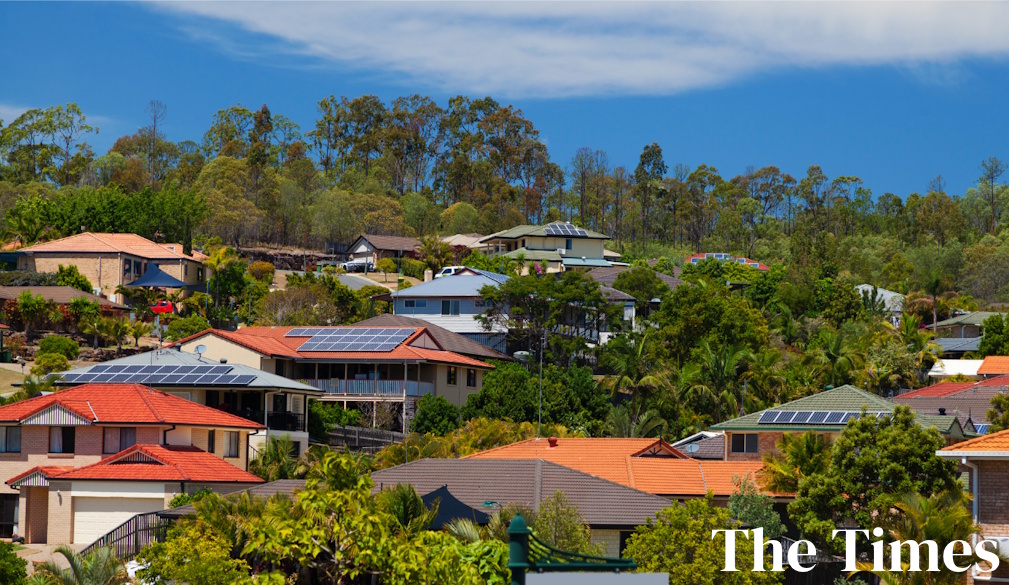
Housing affordability has become the clearest symbol of national anxiety.

For decades Australians were told property was the pathway to security. Governments encouraged investment, banks expanded lending, migration increased demand and state revenues became dependent on rising property values.

The result is that millions of Australians now live in a country where housing is simultaneously an essential human need, an investment vehicle, a retirement strategy and a government revenue stream.

That contradiction was manageable while prices kept rising and interest rates remained low.

It becomes politically dangerous when younger Australians begin to believe the system is permanently closed to them.

The anger is not always loud. Often it appears as resignation.

Young couples delaying children.

Workers staying with parents into their thirties.

Professionals leaving Sydney or Melbourne for regional centres.

People abandoning the dream of ownership entirely and focusing instead on survival.

Meanwhile businesses face their own uncertainty.

Many employers are not demanding handouts from government. What they increasingly seek is predictability.

Business owners can adapt to difficult conditions if the rules are stable. What becomes difficult is operating in an environment where taxation, industrial relations, energy costs, inflation and consumer behaviour all feel uncertain simultaneously.

Confidence is fragile.

And confidence matters because modern economies are psychological as much as financial.

Consumers who feel insecure spend less.

Businesses that feel uncertain invest less.

Families that feel anxious delay major decisions.

The broader national mood eventually affects economic performance itself.

Another factor shaping Australia’s mood is the growing perception that ordinary citizens carry the burden while institutions remain insulated.

Australians still largely obey the rules, pay taxes and believe in fairness. But there is increasing scepticism about whether governments, corporations and bureaucracies are operating with the same discipline expected of ordinary households.

People notice waste.

They notice bureaucracy.

They notice projects that cost billions more than promised.

They notice when politicians appear disconnected from everyday financial reality.

At the same time, global instability is feeding domestic unease.

Wars overseas influence Australian fuel prices within days. Supply chain disruptions affect supermarket shelves. International tensions shape migration debates, defence spending and trade relationships.

Australians once felt geographically protected from much of the world’s turmoil.

That sense of insulation has weakened.

Technology and social media amplify every controversy and every crisis in real time. Australians are constantly exposed to anger, division and pessimism from around the world.

The national conversation can sometimes feel permanently agitated.

Yet despite all of this, there are still reasons Australia retains resilience.

Australians remain remarkably adaptive people.

Communities still rally during disasters.

Small businesses continue opening.

Regional areas continue growing.

Families still make sacrifices for their children.

Migrants still arrive believing Australia offers opportunity.

And importantly, Australians have not entirely lost faith in the country itself — only in whether the current trajectory is sustainable.

That distinction matters.

Because the broader mood of the nation is not one of hopelessness.

It is one of uncertainty.

Australians are asking whether the systems that once built a stable and aspirational society are still functioning as intended.

Whether governments still understand the pressures facing ordinary households.

Whether younger generations will inherit a stronger country or a more divided and expensive one.

And whether modern Australia still rewards effort in the way it once did.

Those are not fringe concerns anymore.

They are becoming the central questions of Australian public life.

Times Magazine

How Australian Businesses Are Using AI To Cut Costs And Improve Efficiency

Artificial intelligence was once viewed by many small business owners as something futuristic, exp...

Quickest Way of Getting Rid of Your Old Cars in Brisbane?

If you are done searching for a practical solution for quickly getting rid of your old car, this w...

The Human Supplement Craze Has Officially Gone to the Dogs (Literally)

Australians’ appetite for supplements is no longer limited to their own vitamin cabinets. New reta...

AI Guilt: It’s Real — But it is irrational

Artificial intelligence is rapidly becoming one of the most powerful tools ever made available to ...

Australians Are Keeping Their Cars Longer — And It’s Changing The Market

Australia’s car market is undergoing a subtle but important transformation. People are keeping th...

Streaming Fatigue: Australians Overwhelmed By Subscriptions

Streaming was once supposed to simplify entertainment. Instead, many Australians now feel overwhe...

Why Shopping Centres No Longer Feel Exciting

There was a time when going to the shopping centre felt like an event. Families spent entire Satu...

Harry And Meghan: Less Powerful As Royals, More Powerful As Content

For all the claims of “Harry and Meghan fatigue”, the world’s media still cannot stop talking abou...

Surprising things Aussies do to ‘manifest’ winning a dream home as Australia’s biggest ever prize unveiled

Dream Home Art Union has unveiled its biggest prize in its 70-year history supporting veterans - a...

The Times Features

ASX Movements Since Labor’s Budget: What Investors Are …

Australia’s share market has spent recent weeks digesting the implications of Labor’s federal budg...

QLD Day

On Saturday 6 June, parkrun events across the state will be a sea of maroon, with communities  str...

NAGNATA: ‘FUTURE = FIBRE’ — Movement 21 at AFW 2026 …

Photography by Cesar OcampoOn Day 3 of Australian Fashion Week 2026, the energy at the runway shifte...

Flu Season in Australia: Why Health Authorities Are Tak…

As winter settles across Australia, so too does the annual flu season — a recurring health challen...

Smart Supermarket Shopping: The Money-Saving Hacks Aust…

Australians are becoming smarter supermarket shoppers. Rising grocery prices, higher mortgage rep...

Kmart’s Homewares Revolution: How a Discount Retailer B…

There was a time when many Australians viewed Kmart as the place to buy low-cost basics, school su...

“People Are Spending Less”: Small Businesses Feel Austr…

Sometimes the real state of the economy is not found in Treasury papers, Reserve Bank statements o...

The Arrival of Winter: More Than Just a Date on the Cal…

Winter arrives quietly in Australia. There is no dramatic wall of snow sweeping across the nation ...

The Blood Test That Could Change Colon Cancer Screening…

A simple blood test that may one day reduce the need for colonoscopies is generating enormous inte...