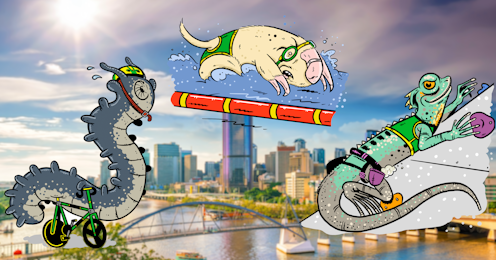
One of these underrated animals should be Australia’s 2032 Olympic mascot. Which would you choose?
- Written by: Euan Ritchie, Professor in Wildlife Ecology and Conservation, School of Life & Environmental Sciences, Deakin University
Am I not pretty enough? This article is part of The Conversation’s series[1] introducing you to unloved Australian animals that need our help.
Australia is set to host the 2032 Olympic games in Queensland’s capital Brisbane, captivating an audience of billions. With so many eyes on Australia, the burning question is, of course, what animal(s) should be the official mascot(s) of the games, and why?
Summer Olympics past[2] have featured recognisable animal mascots such as Waldi the daschund (Munich, 1972), Amik the beaver (Montreal, 1976), Misha the bear (Moscow, 1980), Sam the eagle (Los Angeles, 1984) and Hodori the tiger (Seoul, 1988).
Iconic and familiar mammals and birds dominate the list. The trend continued at Sydney’s 2000 games which featured Syd (playtpus), Olly (kookaburra) and Millie (echidna).
But the Brisbane Olympics is a great opportunity to showcase lesser known species, including those with uncertain futures.
Sadly Australia is a world leader in extinctions. Highlighting species many are unfamiliar with, the threats to them[3] and their respective habitats and ecosystems[4], could help to stimulate increased conservation efforts.
From a “worm” that shoots deadly slime from its head, to a blind marsupial mole that “swims” underground, let’s take a look at three leading candidates (plus 13 special mentions). What makes them so special, and what physical and athletic talents do they possess?
Onychophorans, or velvet worms
Velvet worms[6] are extraordinary forest and woodland denizens thought to have changed little in roughly 500 million years. Australian velvet worms are often smaller than 5 centimetres and look a bit like a worm-caterpillar mash up. They’re found across Australia and other locations globally[7].
Their waterproof, velvet-like skin is covered in tiny protusions called papillae, which have tactile and smell-sensitive bristles on the end[8]. Velvet worms possess antennae and Australian species have 14-16 pairs of stumpy “legs”, each with a claw that helps them move across uneven surfaces such as logs and rocks.
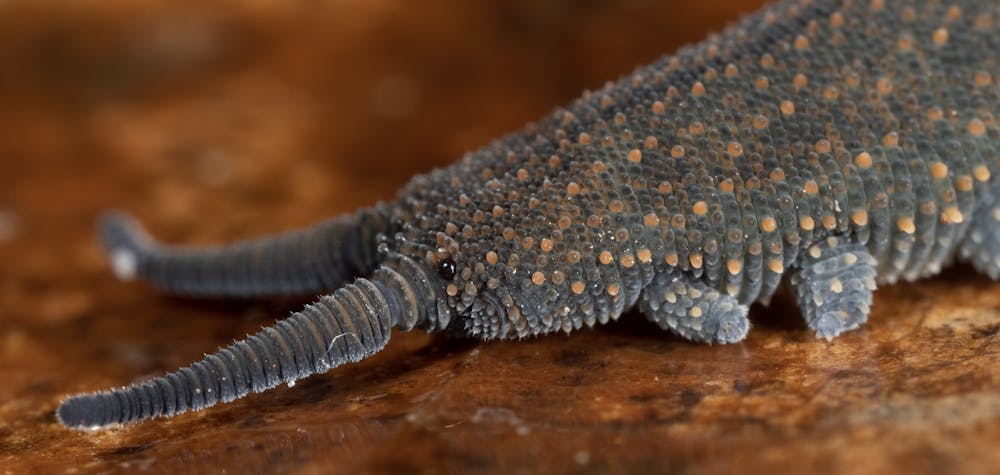
Their colour varies between species, often blue, grey, purple or brown. Many display exquisite, detailed and showy patterns that can include diamonds and stripes – clear X-factor for a potential mascot.
Although velvet worms may be relatively small and, dare I say it, adorable, don’t be fooled. These animals are voracious predators.
They capture unsuspecting prey – other invertebrates – at night by firing sticky slime[9] from glands on their heads. Once the victim is subdued, velvet worms bite their prey and inject saliva that breaks down tissues and liquefies them, ready to be easily sucked out.
If this isn’t intimidating enough, one species (Euperipatoides rowelli[10]) lives and hunts in groups, with a social hierarchy under the control of a dominant female who feeds first following a kill.
Despite their formidable abilities, velvet worms are vulnerable to habitat destruction and fragmentation, and a changing climate.
Jalbil (Boyd’s forest dragon)
Jalbil[12] is found in the rainforests of tropical North Queensland. They are a truly striking lizard – bearing a prominent pointy crest and a line of spikes down the back, distinct conical cheek scales and a resplendent yellow throat (dewlap) which can be erected to signal to each other.
Despite their colourful and ornate appearance, Jalbil can be very hard to spot as they’re perfectly camouflaged with their surroundings. They spend much of their time clinging vertically to tree trunks often at or below human head-height. Some have favourite trees they use more frequently.
If they detect movement, they simply move around the tree trunk to be out of direct view.
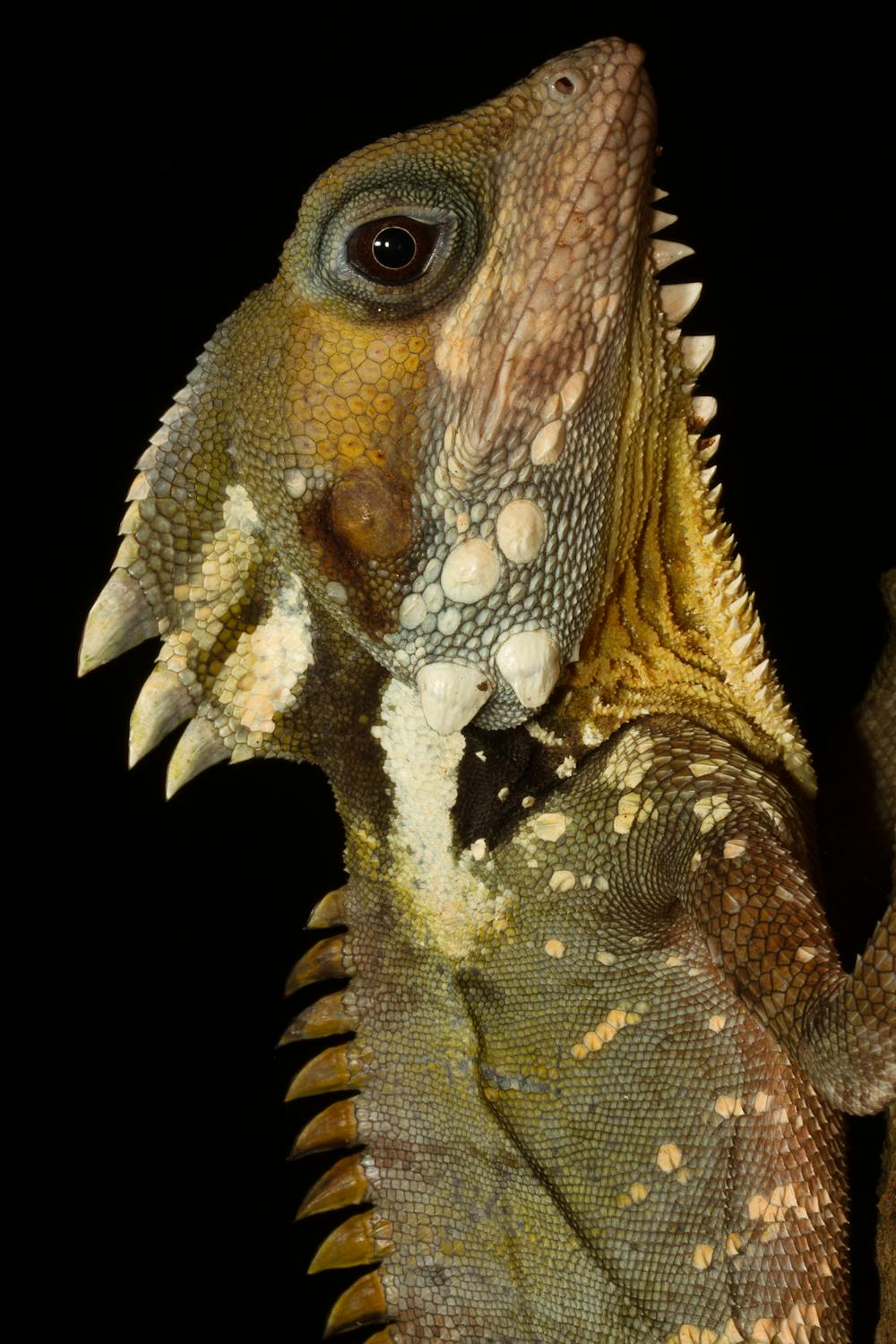 Jalbil (Boyd’s forest dragon) is found in the rainforests of North Queensland’s Wet Tropics.
Chris Jolly
Jalbil (Boyd’s forest dragon) is found in the rainforests of North Queensland’s Wet Tropics.
Chris Jolly
Reaching lengths of around 50cm, Jalbil mostly eat invertebrates, including ants, beetles, grasshoppers and worms. Males may have access to multiple female mates, and breeding is stimulated by storms at the beginning of the wet season.
While Jalbil are under no immediate threat, their future is uncertain[13]. Jalbil are ectothermic, so unlike mammals and birds (endothermic), they can’t regulate their internal body heat through metabolism. Sunlight is often very patchy and limited below the rainforest canopy, restricting opportunities for basking to warm up.
Instead, Jalbil simply allow their body temperature to conform with the ambient conditions of their environment (thermo-conforming). This means if climate change leads to increased temperatures in the rainforests of Australia’s Wet Tropics[14], Jalbil may no longer be able to maintain a safe body temperature and large areas of habitat may also become unsuitable.
Itjaritjari and kakarratul (southern and northern marsupial moles)
These remarkable subterranean-dwelling marsupials[16] really are in a league of their own. Both moles can fit in the palm of your hand, measuring up to about 150 millimetres and weighing about as much as a lemon (40-70 grams).
What these diminutive mammals lack in size they make up for in digging power – if only digging were an official Olympic sport. In central dunefields, they can dig up to 60 kilometres[17] of tunnel per hectare.
Marsupial moles are covered in fine, silky, creamy-gold fur. They have powerful short arms with long claws, shovels for furious digging. Their back legs also help them push. Instead of creating and living in permanent burrows, they “swim” underground across Australia’s deserts for most of their lives.
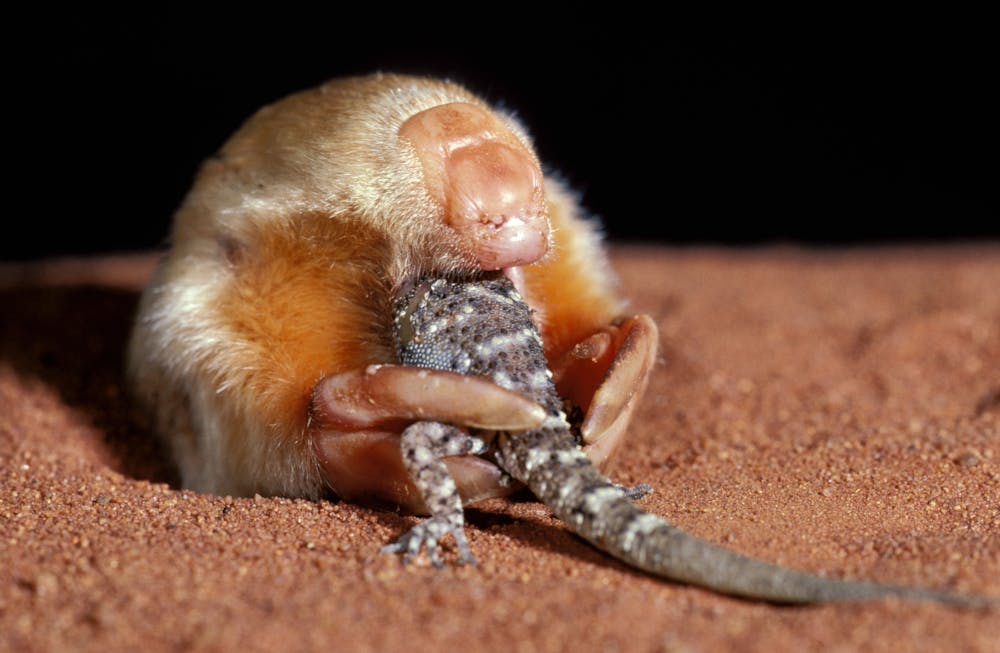 A marsupial mole dining on a gecko in the Northern Territory.
Mike Gillam/AUSCAPE via Alamy[18]
A marsupial mole dining on a gecko in the Northern Territory.
Mike Gillam/AUSCAPE via Alamy[18]
The impressive adaptations don’t end there either. They also have ridiculously short but strong, tough-skinned tails that serve as anchors while digging. Females also have a backwards-facing pouch and all have nose shields that protect their nostrils, ensuring sand doesn’t end up where it’s not supposed to.
Due to living underground for most of their lives, many mole mysteries remain regarding their day-to-day lives[19]. Scientists do know they eat a wide range of invertebrates including termites, beetles and ants, and small reptiles such as geckoes.
But while neither species is thought to be in danger of extinction, there are no reliable population estimates across their vast distributions. What’s more, introduced predators (feral cats and foxes) are known to prey upon them. Itjaritjari is listed as vulnerable in the Northern Territory.
And 13 special mentions go to…
With so many amazing wildlife species in Australia, it really is a near impossible task to choose our next mascot. So I also want to give special mentions to the following worthy contenders:
The Australian giant cuttlefish
These marine animals[20] put on spectacular, colourful displays each year when they form large breeding aggregations.
Read more: Why we're watching the giant Australian cuttlefish[21]
Arnkerrth (thorny devil)
A desert-dwelling[22], ant-eating machine that can drink simply by standing in puddles.
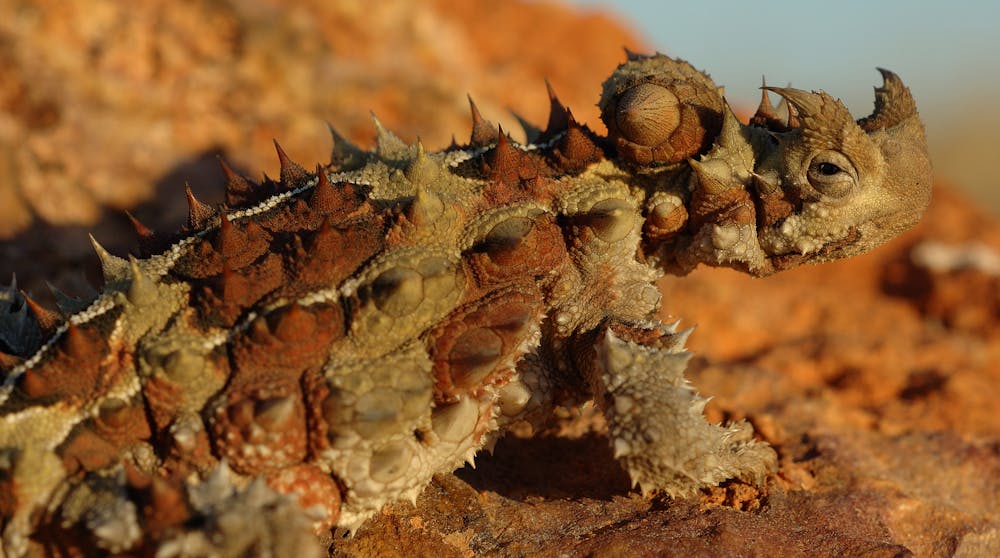 Thorny devils can eat more than 1,000 ants per meal.
Euan Ritchie
Thorny devils can eat more than 1,000 ants per meal.
Euan Ritchie
The Torresian striped possum
This striking black and white possum[23] is thought to have the largest brain relative to body size of any marsupial. Their extra long fourth finger makes extracting delicious grubs from rotting wood a cinch.
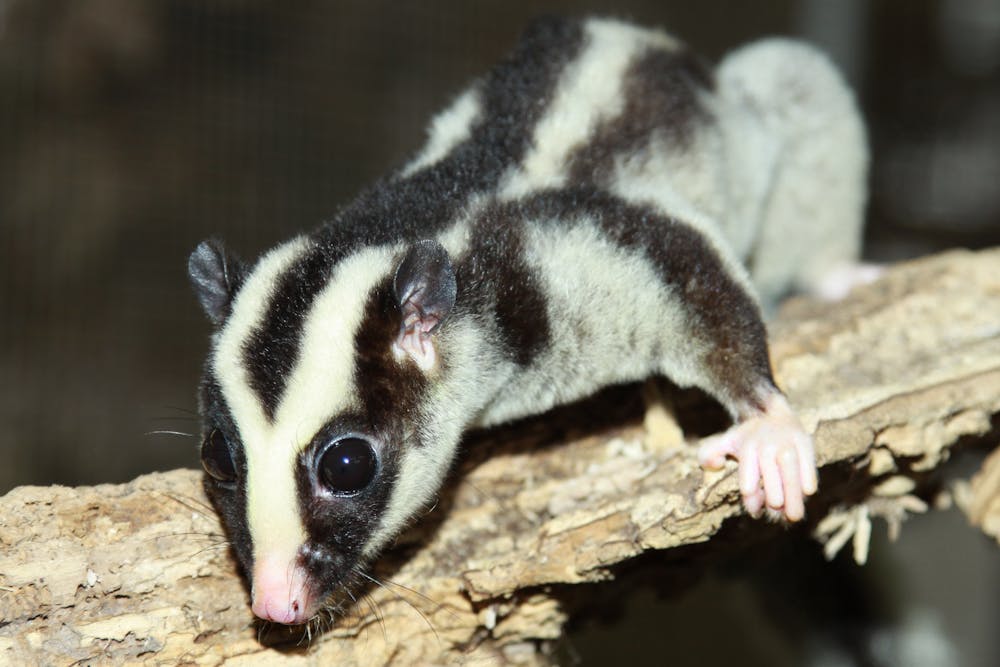 The Torresian striped possum moves with speed throughout North Queensland’s rainforests.
Shutterstock
The Torresian striped possum moves with speed throughout North Queensland’s rainforests.
Shutterstock
Kila (palm cockatoo)
Our largest[24] and arguably most spectacular “rockatoo[25]”, which plays the drums.
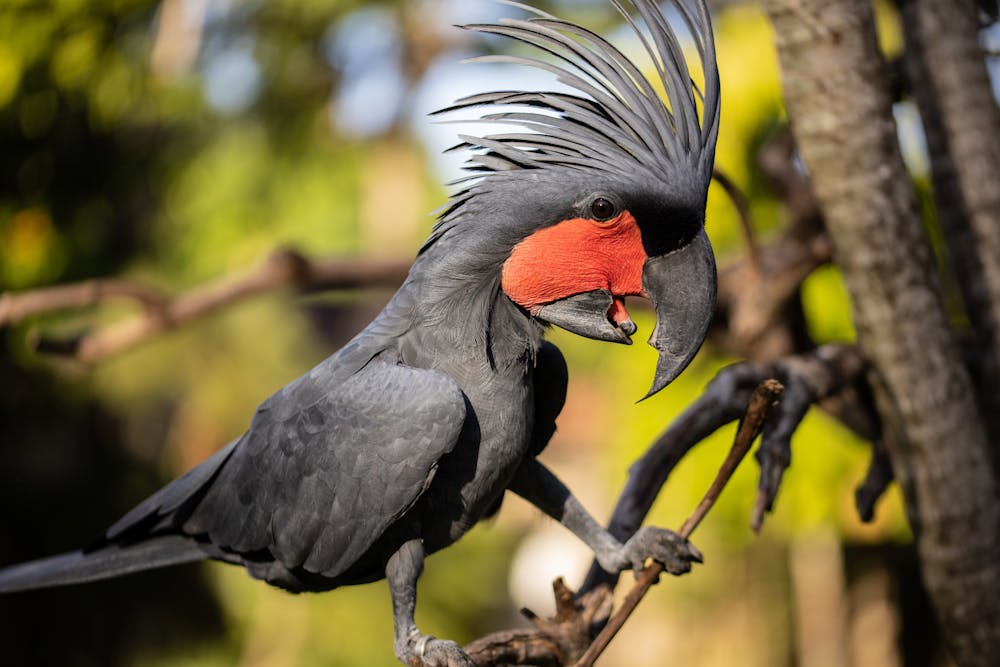 The Queensland government moved this species onto the endangered list in 2021.
Shutterstock
The Queensland government moved this species onto the endangered list in 2021.
Shutterstock
Read more: The 'Ringo Starr' of birds is now endangered – here’s how we can still save our drum-playing palm cockatoos[26]
Ulysses butterfly
Also known as mountain blue butterflies, the vivid, electric blue wings of Ulysses butterflies[27] can span as much as 130 millimetres.
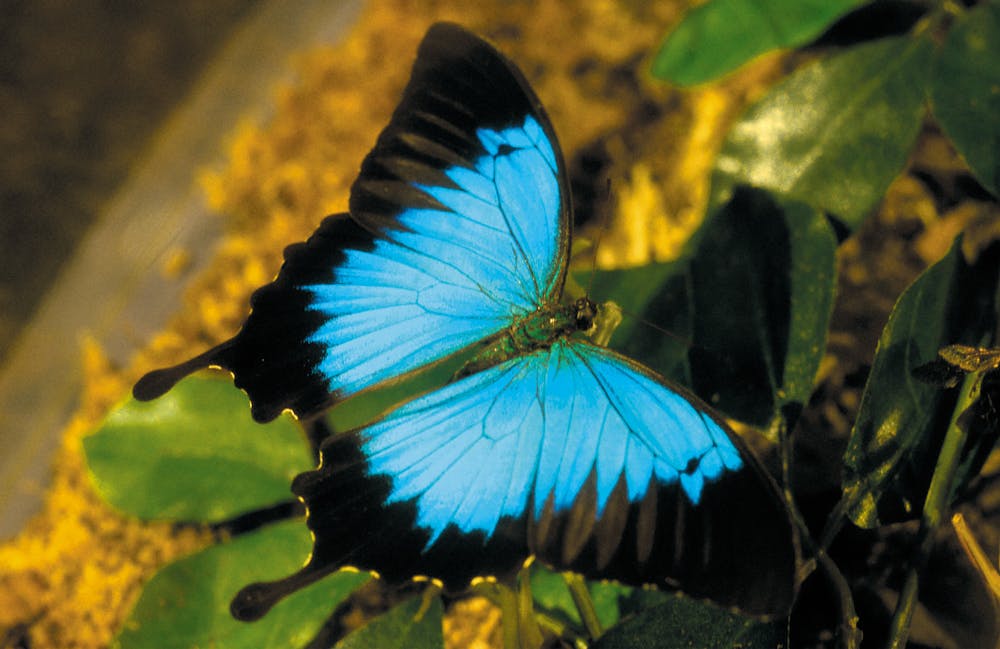 An exquisite local of North Queensland.
Willem van Aken/CSIRO Science Image, CC BY-SA[28]
An exquisite local of North Queensland.
Willem van Aken/CSIRO Science Image, CC BY-SA[28]
The Australian lungfish
A living fossil[29], which is now found only in Queensland, can breath air as well as in the water.
 The Australian lungfish is restricted to southeast Queensland.
Alice Clement
The Australian lungfish is restricted to southeast Queensland.
Alice Clement
Read more: Meet 5 remarkably old animals, from a Greenland shark to a featherless, seafaring cockatoo[30]
Mupee, boongary or marbi (Lumholtz’s tree kangaroo)
Despite being powerfully built for climbing, Lumholtz’s tree kangaroos[31] are also adept at jumping, when alarmed they’ve been known to jump from heights of up to 15m to the ground.
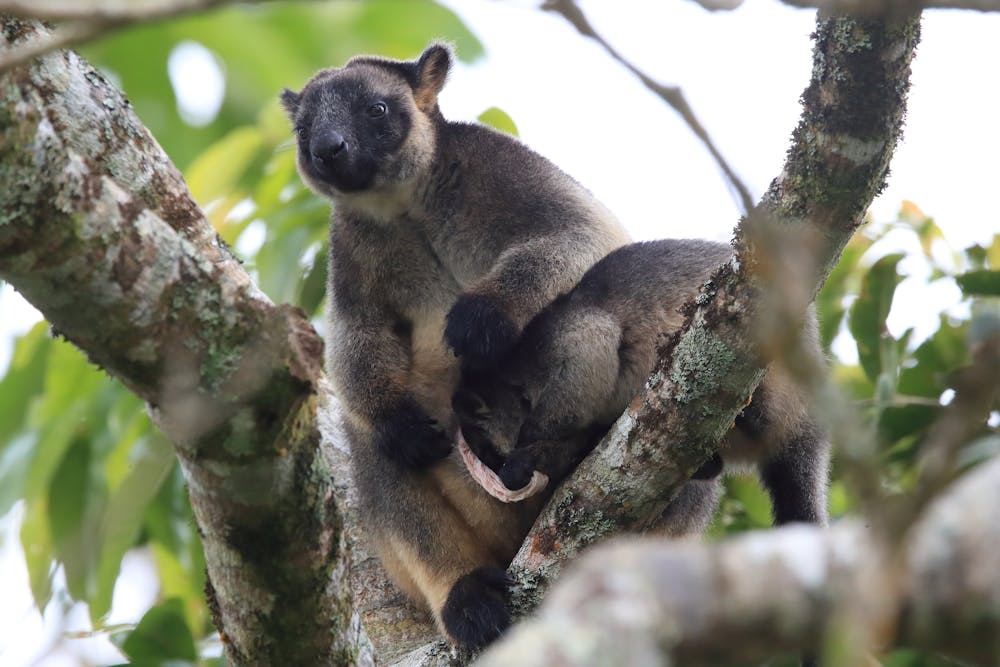 Who knew kangaroos could climb and bounce through trees?
Shutterstock
Who knew kangaroos could climb and bounce through trees?
Shutterstock
Read more: Meet Chimbu, the blue-eyed, bear-eared tree kangaroo. Your cuppa can help save his species[32]
The green tree python
Green tree pythons[33] are the most vivid green snake you can possibly imagine. While adult pythons are a vibrant green the juveniles may be bright yellow or red (but not in Australia), changing colour[34] when they are about half a metre long.
 Another reptile with serious wow factor.
Chris Jolly
Another reptile with serious wow factor.
Chris Jolly
The chameleon grasshopper
Based on temperature, male chameleon grasshoppers[35] can change colour from black to turquoise, and back to black again, each day.
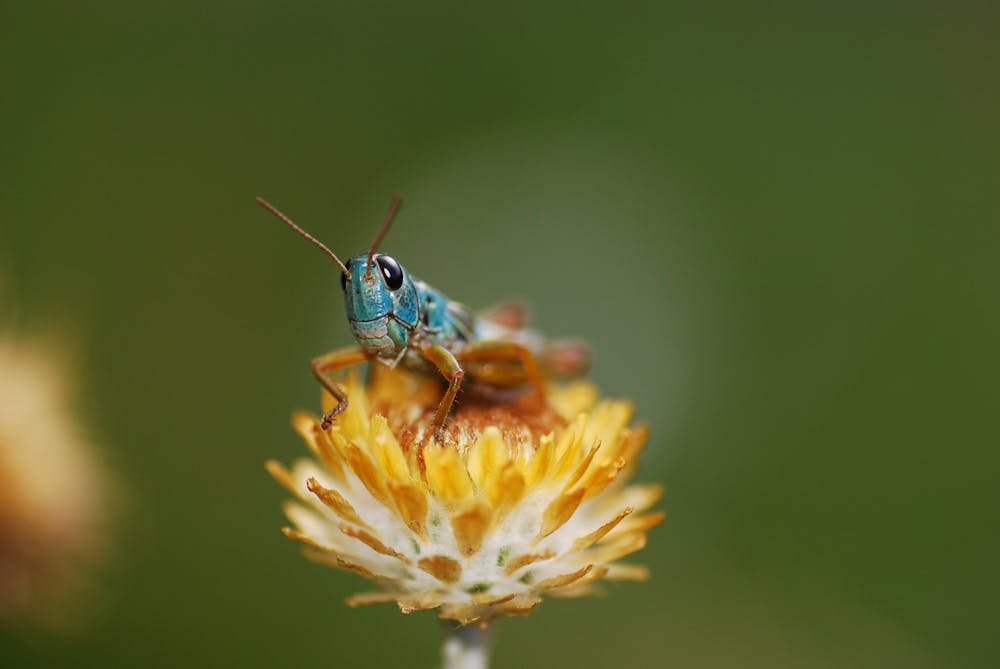 A kaleidoscope of colour in the Australian alps.
Kate Umbers
A kaleidoscope of colour in the Australian alps.
Kate Umbers
Greater gliders
These fabulous fuzzballs[36] can glide up to 100m[37] in a single leap.
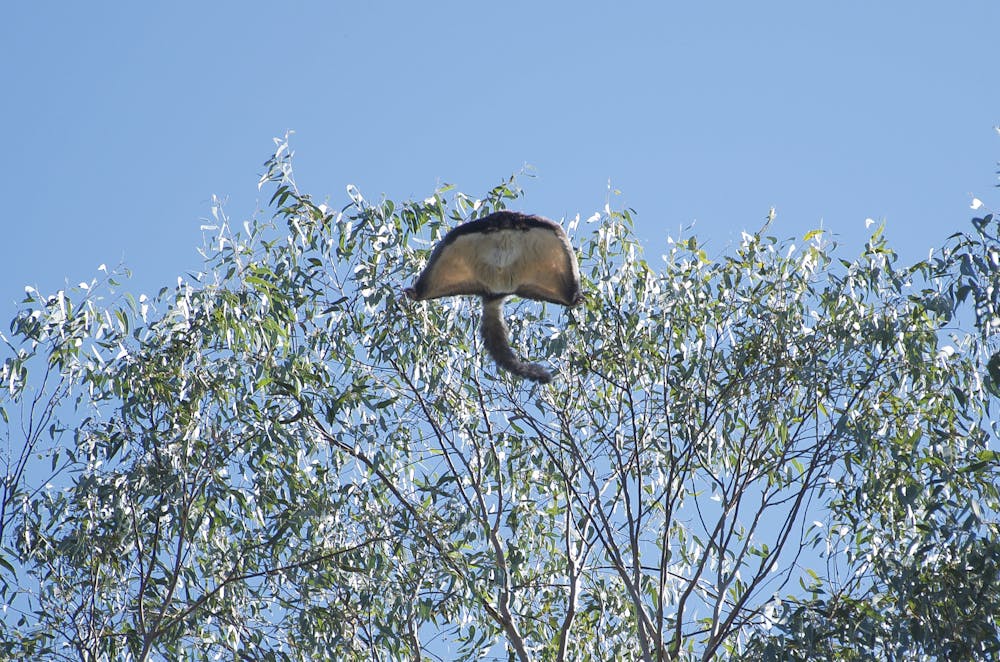 Around the size of a small cat, greater gliders are Australia’s largest gliding marsupial.
AAP Image/Supplied by WWF Australia, Sami Raines
Around the size of a small cat, greater gliders are Australia’s largest gliding marsupial.
AAP Image/Supplied by WWF Australia, Sami Raines
Read more: Greater gliders are hurtling towards extinction, and the blame lies squarely with Australian governments[38]
Peacock spiders
Peacock spiders[39] come in rainbow colours and the males sure know how to shake it[40]. Their vivid colours, such as in the species Maratus volans, are due to tiny scales that form nanoscopic lenses created from carbon nanotubes.
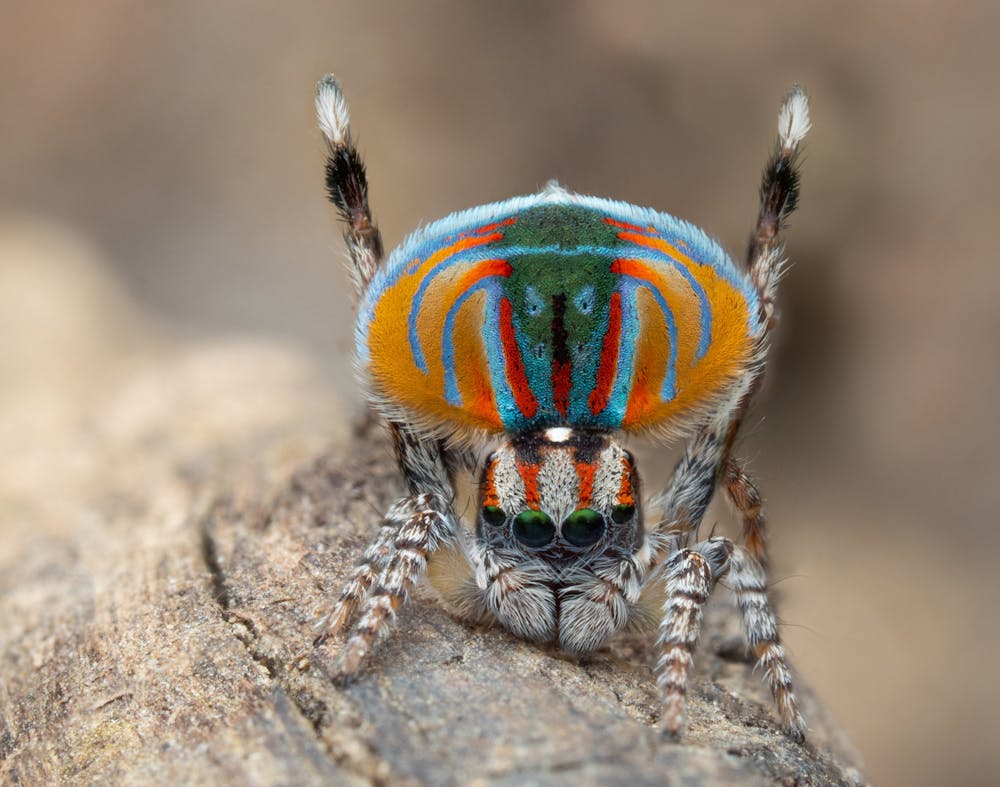 Peacock spiders are found only in Australia.
Joseph Schubert
Peacock spiders are found only in Australia.
Joseph Schubert
Read more: I travelled Australia looking for peacock spiders, and collected 7 new species (and named one after the starry night sky)[41]
Corroboree frogs
They are a striking black and yellow, and desperately need help[42].
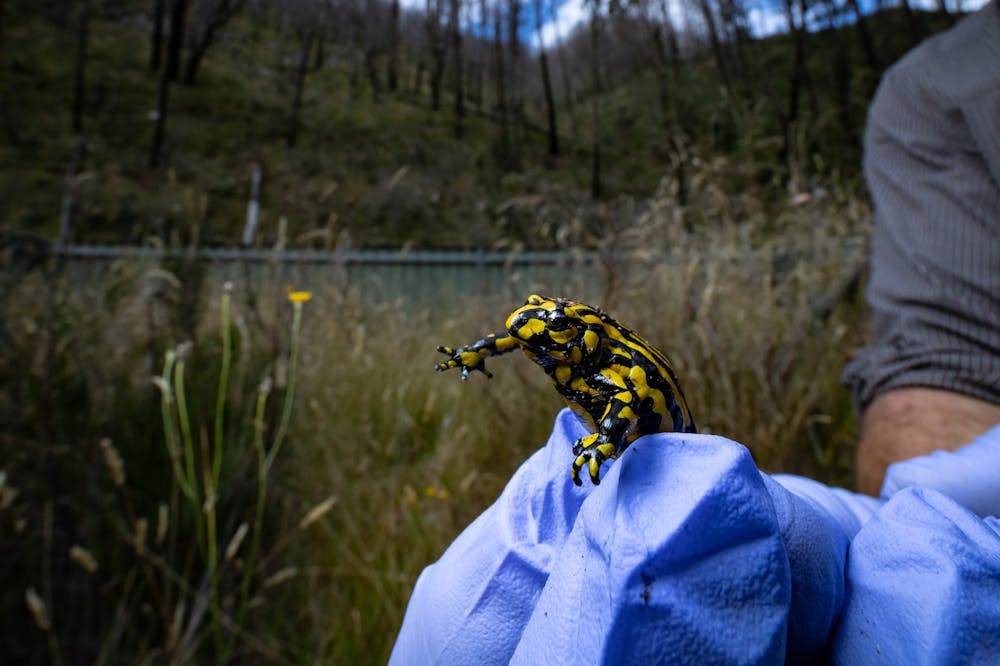 Both southern and northern corroboree frogs are listed as critically endangered.
AAP Image/Supplied by NSW Minister for Environment and Heritage James Griffin
Both southern and northern corroboree frogs are listed as critically endangered.
AAP Image/Supplied by NSW Minister for Environment and Heritage James Griffin
Read more: Our field cameras melted in the bushfires. When we opened them, the results were startling[43]
And finally, I’ll always have a soft spot for Australia’s much maligned canid, the dingo[44].
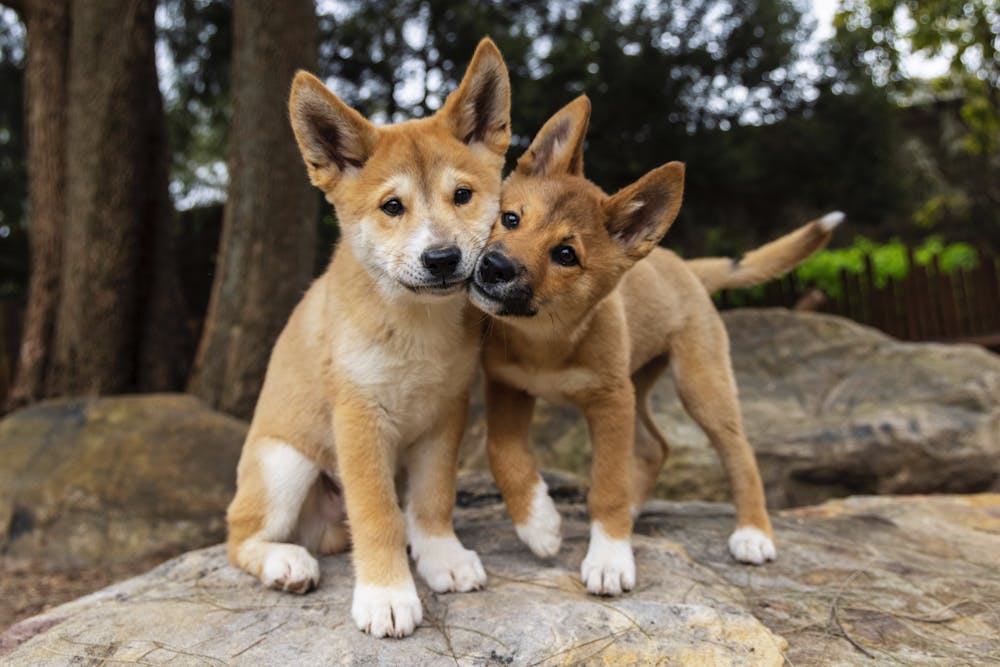 Two five-month-old dingo pups, Kep Kep and Warada, at Taronga Zoo in Sydney.
AAP Image/Supplied by Taronga Zoo
Two five-month-old dingo pups, Kep Kep and Warada, at Taronga Zoo in Sydney.
AAP Image/Supplied by Taronga Zoo
So now, over to you. What are your suggestions for unique animal mascots at the 2032 Brisbane Olympics?
References
- ^ The Conversation’s series (theconversation.com)
- ^ Summer Olympics past (olympics.com)
- ^ threats to them (theconversation.com)
- ^ habitats and ecosystems (theconversation.com)
- ^ CC BY-ND (creativecommons.org)
- ^ Velvet worms (www.wettropics.gov.au)
- ^ other locations globally (australian.museum)
- ^ bristles on the end (australian.museum)
- ^ firing sticky slime (www.wired.com)
- ^ Euperipatoides rowelli (www.australiangeographic.com.au)
- ^ CC BY-ND (creativecommons.org)
- ^ Jalbil (arod.com.au)
- ^ their future is uncertain (www.science.org)
- ^ increased temperatures in the rainforests of Australia’s Wet Tropics (royalsocietypublishing.org)
- ^ CC BY-ND (creativecommons.org)
- ^ subterranean-dwelling marsupials (cosmosmagazine.com)
- ^ up to 60 kilometres (www.australiangeographic.com.au)
- ^ Mike Gillam/AUSCAPE via Alamy (www.alamy.com)
- ^ many mole mysteries remain regarding their day-to-day lives (www.australiangeographic.com.au)
- ^ marine animals (theconversation.com)
- ^ Why we're watching the giant Australian cuttlefish (theconversation.com)
- ^ A desert-dwelling (www.wired.com)
- ^ possum (cosmosmagazine.com)
- ^ Our largest (www.theguardian.com)
- ^ rockatoo (www.youtube.com)
- ^ The 'Ringo Starr' of birds is now endangered – here’s how we can still save our drum-playing palm cockatoos (theconversation.com)
- ^ Ulysses butterflies (www.wettropics.gov.au)
- ^ CC BY-SA (creativecommons.org)
- ^ A living fossil (australian.museum)
- ^ Meet 5 remarkably old animals, from a Greenland shark to a featherless, seafaring cockatoo (theconversation.com)
- ^ tree kangaroos (neradatea.com.au)
- ^ Meet Chimbu, the blue-eyed, bear-eared tree kangaroo. Your cuppa can help save his species (theconversation.com)
- ^ Green tree pythons (arod.com.au)
- ^ changing colour (royalsocietypublishing.org)
- ^ chameleon grasshoppers (www.australiangeographic.com.au)
- ^ fabulous fuzzballs (theconversation.com)
- ^ glide up to 100m (cosmosmagazine.com)
- ^ Greater gliders are hurtling towards extinction, and the blame lies squarely with Australian governments (theconversation.com)
- ^ Peacock spiders (theconversation.com)
- ^ how to shake it (www.youtube.com)
- ^ I travelled Australia looking for peacock spiders, and collected 7 new species (and named one after the starry night sky) (theconversation.com)
- ^ desperately need help (theconversation.com)
- ^ Our field cameras melted in the bushfires. When we opened them, the results were startling (theconversation.com)
- ^ dingo (cosmosmagazine.com)