How to Compare Group Umrah Packages Before Booking
- Written by: Times Media
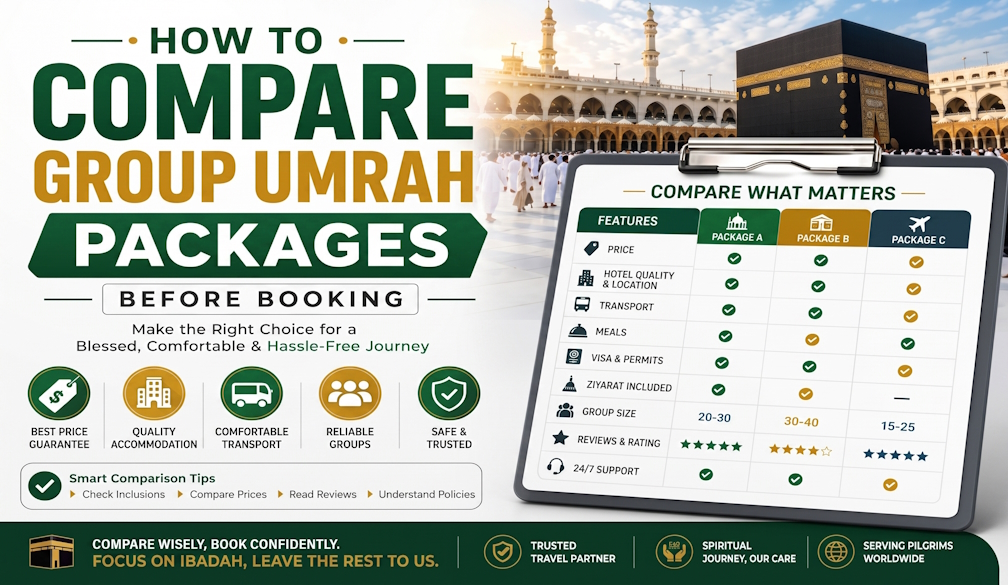
For the Umrah journey, there is a widely common belief that each one of the pilgrims deserves to spend it with comfort and peace. In this regard, group Umrah is the best option for solo pilgrims as they can use the support of fellow Muslims. Nevertheless, finding all inclusive group Umrah packages is more than just finding the lowest prices for the services. The key amenities will be the same in all packages but there are more things that you need to compare. Finding the best package for your journey can affect your entire journey. The following article will guide you on how to compare your package before booking. It will help you spend this journey with ultimate comfort so you can focus on your Ibadah.
Start by Comparing the Total Package Price
You have to check what is included in the package and don’t go for the advertised price. Sometimes, the package provider advertises something else and after booking they ask you for more money. And this is the main reason many pilgrims suffer because they go for the headline price. You have to check the per-person cost and the facilities each person will get with the package.
Moreover, you have to check how many people will share one room. You don’t want to end up sharing a room with multiple people. It will be very frustrating and you might end up fatigued because of sharing a room with so many people. Furthermore, you also have to check the taxes and hidden costs that many travel agencies don’t mention. In most cases, they reveal these prices after pilgrims book their package. Make sure that you figure out all these things before booking.
Compare Flight Options and Travel Convenience
Flights are the main components of your journey so they have to be comfortable. It is necessary that you check which airline you will travel with. Moreover, you have to check the departure time which is so important. Another thing that you need to check is whether the flights are direct or connecting. There is a huge difference and if you haven’t travelled by air then you need to understand.
Direct flights mean that you will reach your destination directly without stopping anywhere. And connecting flights mean you will have to stop in between your journey. You will have to stop at the airport in one or more countries depending on where you start your journey. Furthermore, you also have to check the route of your connecting flight. Make sure there are no extended stays between your flights. It will be very frustrating if you have to go through extended waiting.
Check Hotel Locations in Makkah and Madinah
Hotels are the next very important component in your journey which you have to compare. The location of your hotel in both holy cities matters a lot. You will have to walk longer distances on a daily basis if your hotel is far away. It can affect your health badly and sometimes pilgrims fall sick because of that. Moreover, if the hotel is situated far away from the Haram, then you should have shuttle service. There are multiple hotels in Makkah and Medina that offer shuttle service to pilgrims. Either your hotel should provide this service or your package provider should. Do not book your package until you sort this issue out.
Furthermore, find only all inclusive group Umrah packages for comparison. These packages are curated especially to provide all kinds of services to make your journey comfortable. Another thing that you have to check is that your hotel should provide meals. This option depends on your package tier or type as every agency has different ones. But usual package offer at least breakfast regardless of the package type. It is one of the necessary things that you need to check while comparing packages.
Examine Transport and Group Arrangements
You will need transportation to travel within the country and transfer from the airport to your hotel. Usually, you will have to travel back and forth from Makkah to Medina several times during this journey. So, you will require a suitable means of transportation for this journey. That’s why your package should include this facility. You have to make sure that your package provider is offering this facility before booking. Moreover, you also have to check who is in your group.
It is very important that you check your companions before taking this journey. You have to make sure that the people you are travelling with come from a healthy background. You will have to spend all the time with these people and the experience will remain with you forever. A good travel agency provides you with information about group members and the leader. This is called transparency and you have to check everyone in your group.
Investigate the Travel Company and Group Support
This should be the first thing in this process because it is the most important one. You have to check the health of a travel agency before you check their packages. First of all, you have to check their identity and their accreditation number. Any travel agency working in the UK has given a number by the government. And with this number, the government keep a check on their activities. Another thing you must go through is their online reviews by their clients. It will help you decide whether this travel agency is legitimate or not. In addition, you also have to check their support centre or if they have one. The best travel agencies are those that come with an excellent support centre to help pilgrims.
Final Words
These are all some of the most important things that you need to compare before booking your Umrah package. It will help you choose the best package for your journey. To find some of the excellent 14 Nights Group Umrah Packages, take this journey with Muslims Holy Travel. It is one of the best travel agencies based in the UK. They not only offer flexible packages, but they also have a very big and very productive support centre as well.