Why Smelling Good Behind the Wheel Has Become the New Car Care Standard
- Written by: Times Media
Most Australians who care about their cars spend real time and money on how they look. Regular washes, interior detailing, paint protection, quality floor mats. The standard of care applied to the visual presentation of a well-maintained car has risen considerably over the past decade, driven partly by the growing culture of automotive enthusiasm and partly by the simple fact that people spend a significant portion of their lives inside their vehicles and want that environment to reflect some care.
What hasn't kept pace with that rising standard, until recently, is how those cars smell. The sensory experience that greets you every time you open the door, before you've seen the interior, before you've sat down, before anything else registers, has been left to chance, to a fading synthetic freshener, or to nothing at all. That's starting to change, and the shift is happening fast enough to be worth paying attention to.
The Gap Between How Cars Look and How They Smell
Think about the last time you got into a car that smelled genuinely good. Not like something was masking an odour, not like a synthetic pine forest, but actually good, in the way that a well-chosen home fragrance or a quality hotel lobby smells good. It's a noticeably different experience from the neutral or slightly stale interior that most cars settle into after a few months of use, and the difference is felt immediately even if it's rarely consciously analysed.
The irony is that the same people who notice and appreciate this in other people's cars often haven't done anything about it in their own. Car care culture has developed a sophisticated vocabulary around paint correction, ceramic coatings, and interior protection, but the conversation about fragrance has lagged behind. A car with a flawless detail and a synthetic air freshener hanging from the mirror is a car where the standard of care has been applied inconsistently, and the mismatch is more noticeable than most owners realise.
Why the Old Solutions Never Quite Worked
The traditional approach to car fragrance has always been reactive rather than deliberate. Something starts to smell, so you hang something from the mirror or place a card freshener under the seat, and you consider the problem solved until the next time something goes wrong. This isn't really engaging with fragrance as a dimension of the in-car experience. It's managing odour, which is a different and considerably less interesting project.
The products designed for odour management, the synthetic fresheners, the aerosol sprays, the gel containers, are formulated to be strong rather than to smell good. They announce themselves at the expense of everything else, fade unevenly into something worse than what they started as, and produce an association with cheap synthetic fragrance that the word air freshener has never fully escaped.
Even genuinely clean cars often don't smell particularly good. A car that's been recently detailed smells of nothing, or of cleaning products, or of the interior materials themselves, none of which produce a fragrance experience worth seeking out. Cleanliness is the baseline, not the destination, and a growing number of Australian car owners are starting to understand the difference.
What the Shift to Quality Car Diffusers Actually Looks Like
The category that's emerged to meet the gap between how cars look and how they smell is the quality car diffuser, and the best of what's available represents a genuine step change from what came before.
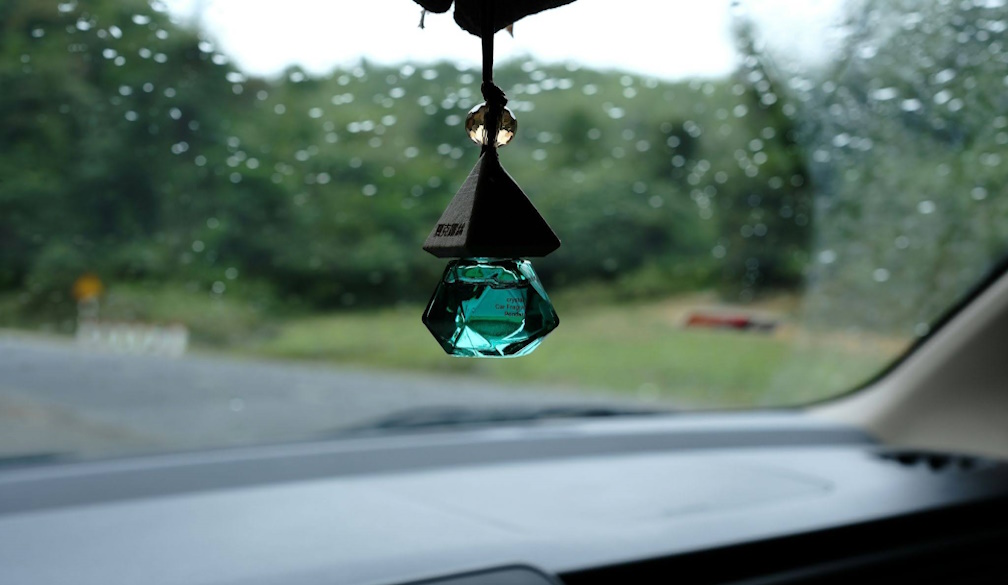
The delivery formats have improved significantly. Smart electric diffusers disperse fragrance consistently and with adjustable intensity, without relying on airflow or evaporation. Air vent diffusers integrate discreetly into the cabin and use the climate control system to distribute fragrance evenly. Hanging diffusers have evolved from cardboard novelties into genuinely considered objects that add something to the visual environment of the interior as well as the olfactory one.
What's changed most meaningfully is the quality of the fragrance itself. Diffusers using fragrances inspired by respected luxury perfume houses bring into the car a scent profile that is warm, complex, and well-structured in a way that generic alternatives simply don't achieve. For Australians searching for a luxury car smell Australia wide, the difference between a diffuser formulated around the character of something like Baccarat Rouge 540 or Tom Ford Tobacco Vanille and a standard synthetic freshener is immediately noticeable to anyone who has experienced both. The category, taken as a whole, has matured into something that rewards the same attention that the rest of car care already receives.
How to Get It Right Without Overthinking It
The practical starting point for any Australian driver who wants to improve their in-car fragrance experience is choosing a diffuser type that suits how they use their car, and a fragrance profile that reflects how they want the interior to feel.
For daily drivers covering significant distances, a smart electric diffuser with adjustable output offers the most reliable and consistent result, with the ability to dial down intensity during short trips and increase it for longer ones. For drivers who want something simpler, an air vent diffuser delivers consistent fragrance whenever the climate control is running, which in Australian conditions covers most of the year.
On fragrance choice, the principle that works most reliably is matching the warmth of the scent to the warmth of the interior. Leather interiors and darker colour palettes suit woody, oriental, and amber-based fragrances that complement the material warmth of the cabin. Lighter, more contemporary interiors work well with citrus, aromatic, or clean aquatic profiles that feel fresh rather than heavy. The goal is a fragrance that seems like it belongs in the car rather than one that's been placed there as an afterthought.
The intensity matters as much as the scent itself. Fragrance in a car should be present without being assertive, noticed without dominating, and comfortable across the full duration of a long drive rather than pleasant for the first ten minutes and overwhelming for the rest. Most quality diffusers allow enough control over output to dial this in correctly once the right fragrance is chosen.
Why This Upgrade Is Worth Making
There's a version of car ownership where every detail has been considered and every sensory dimension of the driving experience has been attended to. The visual presentation of the exterior, the condition and cleanliness of the interior, the quality of the sound system, and the fragrance that meets you when you open the door. That last element has been the missing piece in most Australian cars for long enough that its absence has become normalised.
It doesn't need to be. The gap between a car that smells like nothing in particular and one that smells genuinely good is smaller than most people assume, and the upgrade required to close it is neither expensive nor complicated. It's simply a matter of applying to the olfactory dimension of the in-car experience the same standard of attention that everything else already receives.