Donald Trump in China: What’s in it for Australia?
- Written by: The Times
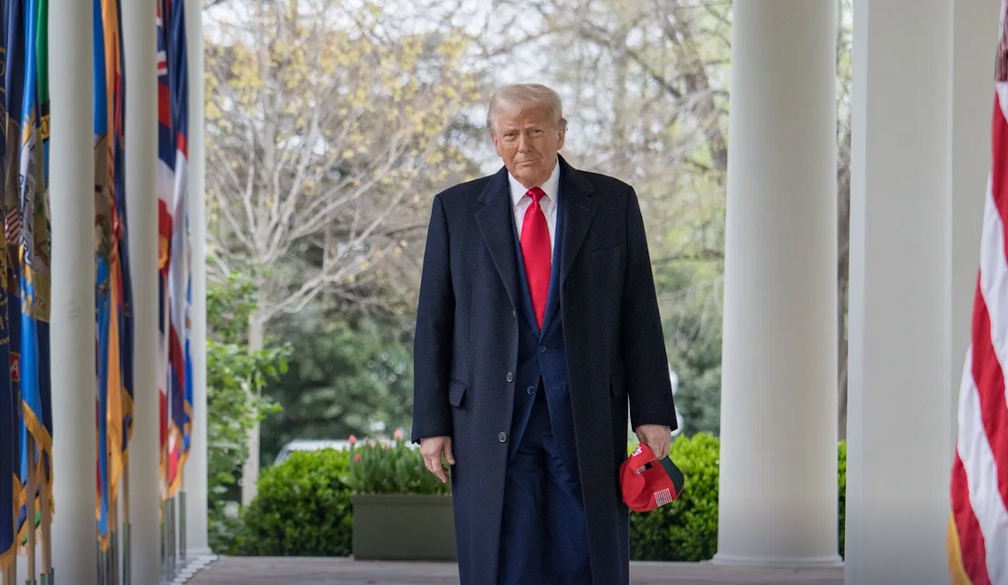
For Australians watching the increasingly unpredictable relationship between the United States and China, the prospect of Donald Trump visiting China would represent far more than political theatre. It would be a meeting capable of reshaping trade routes, commodity markets, strategic alliances and business confidence across the Indo-Pacific region.
Australia, perhaps more than almost any Western nation, sits directly in the middle of the American-Chinese relationship. Australia relies heavily on China economically while simultaneously relying on the United States militarily and strategically. When Washington and Beijing speak politely to each other, Canberra breathes easier. When relations deteriorate, Australians feel the consequences through trade instability, investment uncertainty and geopolitical anxiety.
A Trump visit to China would therefore not simply be about America and China. It would also be about Australia’s future prosperity and security.
The stakes are enormous.
Australia’s Economic Reality
China remains Australia’s largest trading partner by a considerable margin. Australian iron ore, LNG, agricultural products, education services and tourism have all depended heavily on Chinese demand over the past two decades.
At the same time, the United States remains Australia’s closest defence ally and one of its most important investment partners.
This balancing act has become more difficult in recent years as strategic tensions between Washington and Beijing intensified over trade, Taiwan, technology, military expansion in the South China Sea and global influence.
A Trump-China thaw — even temporary — could therefore produce immediate benefits for Australian exporters, investors and financial markets.
Australian businesses dislike uncertainty more than almost anything else. They can adapt to taxes, regulations and changing consumer behaviour. What they struggle with is instability and unpredictability.
A calmer relationship between the world’s two largest economies would likely reduce fears of supply chain disruption, tariff escalation and regional conflict.
That matters greatly to Australia.
Trump’s Style: Transactional Politics
Donald Trump approaches international politics differently from traditional American presidents. His style is openly transactional.
Rather than focusing heavily on diplomatic language or ideological alignment, Trump often frames negotiations around leverage, deals and economic outcomes.
That creates both opportunities and risks for Australia.
On one hand, Trump has shown a willingness to negotiate directly with adversaries and major rivals. He met North Korean leader Kim Jong Un when many believed such talks impossible. He has repeatedly indicated he prefers negotiation to prolonged military entanglement.
If Trump entered discussions with Chinese leadership seeking major trade agreements or strategic understandings, Australia could benefit from reduced regional tension.
On the other hand, Trump has also shown willingness to impose tariffs aggressively and pressure allies economically if he believes American interests are disadvantaged.
Australia understands this reality well. During Trump’s earlier presidency, allies learned that longstanding friendships did not necessarily exempt them from trade disputes or pressure campaigns.
Canberra would therefore welcome stability between Washington and Beijing, but it would also watch carefully for any deal that sidelined Australian interests.
Commodity Markets Would React Immediately
Australia’s economy remains heavily exposed to commodity demand.
Iron ore exports underpin enormous sections of the national economy, particularly Western Australia. LNG exports are similarly critical. Coal, despite political controversy, continues to generate substantial export revenue.
Any sign of improved American-Chinese economic relations could trigger renewed confidence in global manufacturing and construction activity.
That would likely support commodity prices.
Australian mining companies, logistics operators, ports and associated industries would all monitor a Trump-China meeting closely.
The ASX would likely respond rapidly to any perception of reduced geopolitical risk.
The reverse is also true.
If negotiations collapsed publicly or triggered renewed tariff wars, Australian markets could experience immediate volatility.
Australia is deeply exposed because it sells resources into a region whose economic engine depends heavily on Chinese industrial activity and global trade confidence.
The Taiwan Question
No issue looms larger strategically than Taiwan.
China regards Taiwan as part of its sovereign territory. The United States has historically maintained a policy of strategic ambiguity while simultaneously supporting Taiwan militarily and politically.
Australia finds itself in a difficult position regarding any potential conflict.
A military confrontation involving Taiwan could disrupt global shipping lanes, semiconductor supply chains and regional stability. Australia would almost certainly face immense diplomatic and strategic pressure given its alliance with the United States.
If a Trump visit to China reduced tensions surrounding Taiwan, even temporarily, Australia would welcome the breathing space.
Businesses, investors and ordinary Australians do not want conflict in the Indo-Pacific.
War between major powers in the region would fundamentally alter Australia’s economy, defence posture and national confidence.
Even modest diplomatic stabilisation would therefore be viewed positively in Canberra.
Universities, Tourism and Property Markets
Australia’s education sector would also watch developments carefully.
Chinese international students remain enormously important to Australian universities and local economies. Tourism operators similarly benefit heavily from Chinese visitors.
Periods of diplomatic hostility between Australia and China previously affected travel advice, student enrolments and broader sentiment.
If American-Chinese relations improved under a Trump-led diplomatic push, Australia could benefit indirectly from a broader regional warming trend.
Confidence matters.
Families deciding where to send children for university, tourists deciding where to holiday and investors deciding where to deploy capital all pay attention to geopolitical atmospherics.
Australia benefits when the region appears stable, prosperous and open.
Defence and Strategic Anxiety
At the same time, Australia’s defence establishment would remain cautious.
Canberra has spent years strengthening military cooperation with the United States through arrangements such as AUKUS and broader Indo-Pacific defence partnerships.
Australian defence planners increasingly view China’s military rise as a long-term strategic challenge regardless of temporary diplomatic improvements.
A Trump-China rapprochement could therefore generate uncertainty among some strategic thinkers.
Would America soften its Indo-Pacific posture?
Would allies be expected to contribute more financially?
Would Washington prioritise economic deals over long-term alliance structures?
These questions matter enormously to Australia because national defence planning occurs over decades, not election cycles.
Australian governments of both major parties have gradually increased defence spending and strategic preparedness in response to regional uncertainty.
That trajectory is unlikely to reverse quickly.
Australia’s Political Balancing Act
Australian leaders have become increasingly careful in how they speak about both America and China.
The reality is unavoidable: Australia needs both relationships.
China buys Australian exports at extraordinary scale.
America underpins Australia’s security architecture.
A Trump visit to China would therefore place Canberra in a familiar but uncomfortable position — hoping for stability while preparing for unpredictability.
Australian diplomacy increasingly revolves around resilience rather than certainty.
The assumption in Canberra today is that the world may remain volatile for years.
Business Wants Stability, Not Ideology
For Australian businesses, ideology often matters less than predictability.
Shipping companies want stable sea lanes.
Property developers want stable financing markets.
Retailers want affordable imported goods.
Farmers want reliable export demand.
Manufacturers want stable energy and logistics costs.
Whether the American president is Trump or another leader matters less commercially than whether tensions escalate or ease.
A successful Trump-China diplomatic engagement that reduced trade hostilities could therefore be welcomed enthusiastically across many sectors of the Australian economy.
The Broader Mood in Australia
Australians increasingly understand they are living through a major geopolitical transition.
The post-Cold War assumptions of endless globalisation, cheap capital and stable Western dominance no longer feel guaranteed.
The rise of China has transformed the region economically.
America remains dominant militarily but faces growing strategic competition.
Australia sits geographically close to Asia while culturally and strategically aligned with the West.
That reality creates both opportunity and vulnerability.
A Trump visit to China would symbolise an attempt — however imperfect — to manage that tension rather than allow it to spiral further.
For Australia, that may ultimately be the most important point.
Canberra does not need America and China to become close friends.
It simply needs them to avoid becoming enemies.
Because if the relationship between Washington and Beijing collapses completely, Australia may discover that geography and economics leave it exposed in ways no government can easily control.