Do I need a COVID-19 booster shot? 6 questions answered on how to stay protected
- Written by: William Petri, Professor of Medicine, University of Virginia
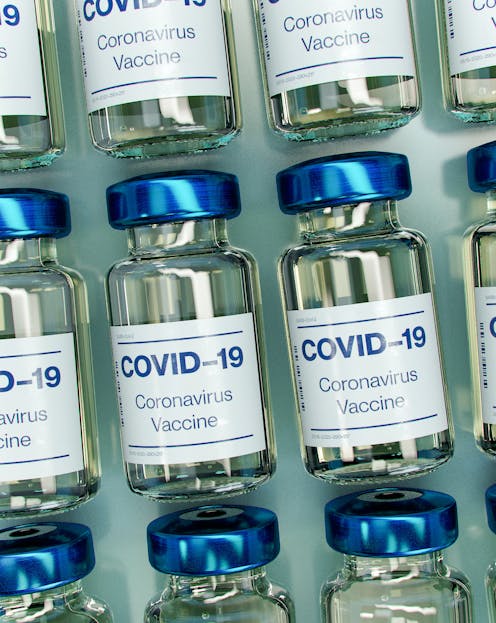
The increasing prevalence of new coronavirus variants[1] is raising questions about how well protected those who’ve already had their COVID-19 shots are against evolving forms of the SARS-CoV-2 virus. Here, microbiology and infectious disease specialist William Petri[2] of the University of Virginia answers some common questions about COVID-19 booster shots.
1. What is a booster shot?
Boosters are an extra dose of a vaccine given to maintain vaccine-induced protection against a disease. They are commonly used to bolster many vaccines because immunity can wear off over time[3]. For example, the flu vaccine[4] needs a booster every year, and the diphtheria and tetanus vaccine[5] every 10 years.
Boosters are often identical to the original vaccine. In some cases, however, the booster shot has been modified to enhance protection against new viral variants. The seasonal flu vaccine[6], most notably, requires an annual booster because the flu virus changes so rapidly.
2. Do I need to get a COVID-19 booster?
Not yet. As of early July 2021, none of the U.S. government authorities is recommending a booster. This includes the Centers for Disease Control and Prevention, the Food and Drug Administration and the Advisory Committee on Immunization Practices to the CDC.
3. Why aren’t booster shots recommended yet?
While vaccine-induced immunity may not last forever, it is not clear when a booster will be needed.
Encouragingly, all of the currently authorized COVID-19 vaccines induce a robust immune memory against the coronavirus. The vaccine teaches your immune system’s memory B cells[7] to produce antibodies when you’re exposed to the virus. Researchers have detected high levels of memory B cells in the lymph nodes of people who received the Pfizer vaccine for at least 12 weeks[8] after they got the shot.
Studies also suggest that authorized COVID-19 vaccines are continuing to offer protection even against emerging strains of the coronavirus[9]. One study found that the Johnson & Johnson vaccine was between 73% and 82% effective[10] at warding off severe disease from the beta variant. And a preliminary study that has not been peer-reviewed found the Pfizer vaccine to be 88% effective[11] against the delta variant.
The other source of long-lasting antibody responses against the coronavirus is cells called plasmablasts[12] that reside in bone marrow. These cells continuously produce antibodies and do not require boosting to maintain their activity. Fortunately, plasmablasts have been detected in the bone marrow of people who received the COVID-19 vaccine[13] for up to 11 months, indicating some degree of long-lasting immune memory.
Booster shots remind your immune system of the pathogen it’s been immunized against.4. How will I know if I need a booster?
You may need to wait for an outbreak in people who have been vaccinated. Researchers are still figuring out the best way to measure the strength of someone’s vaccine-induced immunity. The COVID-19 vaccines have been so effective that there are not many failures to test.
The best candidate to measure are certain antibodies the vaccine induces the immune system to make. They recognize the spike protein[14] that allows the coronavirus to enter and infect cells. Evidence supporting the importance of anti-spike antibodies includes a study showing that the somewhat more effective mRNA vaccines like Pfizer and Moderna generate higher antibody levels in the blood[15] than the adenovirus vector vaccines like Johnson & Johnson and AstraZeneca. In a preliminary study[16] that has not yet been peer-reviewed, anti-spike antibody levels were lower in people who caught COVID-19 after they were vaccinated with the Oxford–AstraZeneca vaccine.
Medical workers would love to be able to give patients a blood test that would tell them how well protected they are or aren’t against COVID-19. That would be a clear indication as to whether a booster shot is needed.
But until researchers know for sure how to measure vaccine-induced immunity, the next indication that boosters may be needed are breakthrough infections in older adults who have already been vaccinated. People over the age of 80 make lower levels of antibodies[17] after vaccination, so their immunity may wane sooner than that of the general population. The elderly would also most likely be the most susceptible to new viral variants[18] that evade the protection current vaccines provide.
5. I’m immunocompromised – should I worry?
Boosters may be necessary for immunocompromised people. In one study, 39 of 40 kidney transplant recipients and a third of dialysis patients failed to make antibodies after vaccination[19]. Another study identified 20 patients with rheumatic or musculoskeletal diseases[20] on medications that suppress the immune system who also did not have detectable antibodies. Both of these studies were done after patients received the full vaccine dose.
Boosters have been shown to help in these cases. In one study, one-third of solid organ transplant patients[21] who had a suboptimal response to two doses of the Pfizer or Moderna vaccines were able to develop an antibody response with a third dose.
Those who are immunocompromised may wonder if the vaccine they received is successfully generating immunity in their body. A preliminary study that has not yet been peer-reviewed did find that a test that specifically targets the anti-spike antibodies[22] the vaccines trigger may be helpful in determining whether the vaccine worked. But for now, the FDA does not recommend[23] antibody tests to assess immunity.
6. Does my booster need to match my first shots?
Likely not. Recent research has shown that mRNA vaccines, like Pfizer and Moderna, can be mixed with adenovirus-based vaccines like AstraZeneca with comparable results[24].
[Get our best science, health and technology stories. Sign up for The Conversation’s science newsletter[25].]
References
- ^ new coronavirus variants (www.cdc.gov)
- ^ microbiology and infectious disease specialist William Petri (scholar.google.com)
- ^ wear off over time (doi.org)
- ^ flu vaccine (www.cdc.gov)
- ^ diphtheria and tetanus vaccine (www.cdc.gov)
- ^ seasonal flu vaccine (www.cdc.gov)
- ^ memory B cells (doi.org)
- ^ at least 12 weeks (doi.org)
- ^ emerging strains of the coronavirus (www.who.int)
- ^ between 73% and 82% effective (doi.org)
- ^ 88% effective (doi.org)
- ^ plasmablasts (doi.org)
- ^ people who received the COVID-19 vaccine (doi.org)
- ^ spike protein (doi.org)
- ^ higher antibody levels in the blood (doi.org)
- ^ preliminary study (doi.org)
- ^ lower levels of antibodies (doi.org)
- ^ most susceptible to new viral variants (doi.org)
- ^ failed to make antibodies after vaccination (doi.org)
- ^ rheumatic or musculoskeletal diseases (doi.org)
- ^ solid organ transplant patients (doi.org)
- ^ test that specifically targets the anti-spike antibodies (doi.org)
- ^ FDA does not recommend (www.fda.gov)
- ^ comparable results (dx.doi.org)
- ^ Sign up for The Conversation’s science newsletter (theconversation.com)